B21, China Town Mall, Midrand




Toilet Paper Production Line
26 Jan 20262
- Products Sourcing
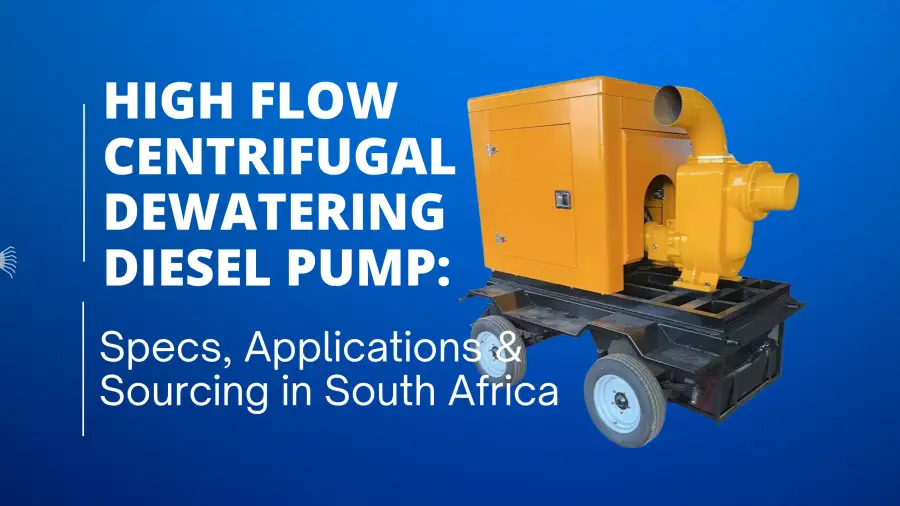
High Flow Centrifugal Dewatering Diesel Pump: Specs, Applications & Sourcing in South Africa
-
Eman Libatu
-
18 Jun 2025
-
82 Comment
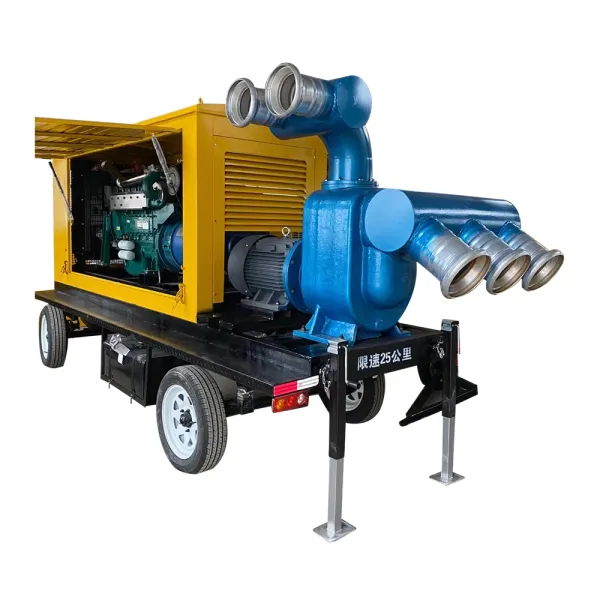
The High Flow Centrifugal Dewatering Smart Sewage Water Industrial Diesel Engine Self-priming Pump is a high-capacity, diesel-driven centrifugal pump designed for quick dewatering and sewage water transfer in industrial and agricultural settings afrimart.co.za.
t offers a flow rate of 240 m³/h and a head of 22 m, powered by a robust 60 kW diesel engine, making it ideal for pumping out construction sites, moving wastewater, and irrigating farmland
This self-priming pump automatically removes air from the lines, so it can start pumping without manual priming, ensuring efficient and reliable operation from the get-go. Built for heavy-duty performance, it handles dirty water and solids with a non-clog design, and its low 1500 RPM engine speed reduces noise and wear for longevityafrimart.co.za. In essence, this pump delivers the high flow and toughness required by African industries – from municipal sewage management to agriculture – all in a portable diesel package that works even in areas without grid power.
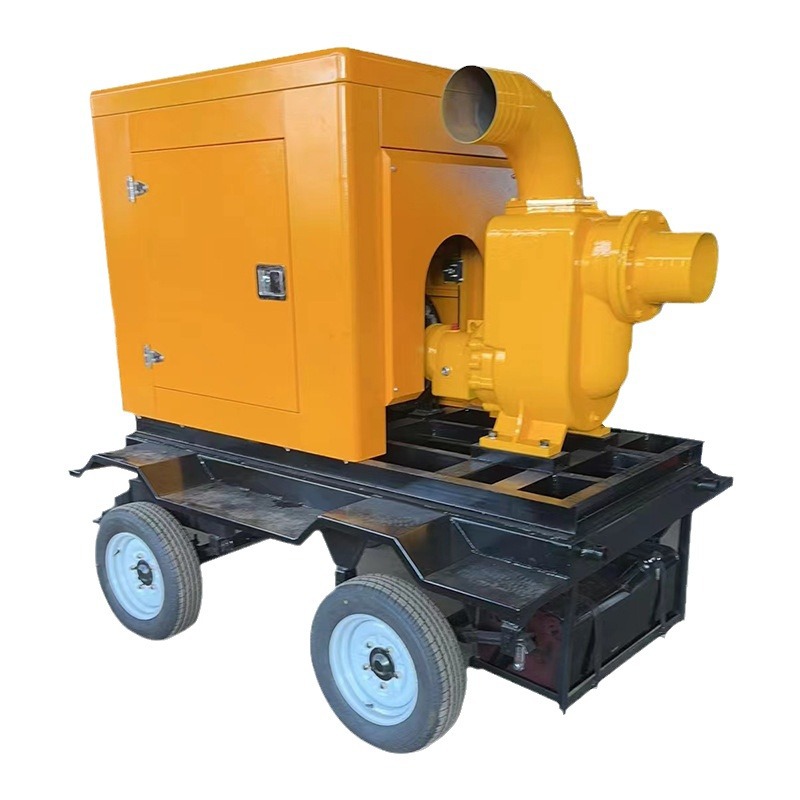
At a Glance – Quick Facts:
Model: ZW200-280-20cut (HRZL brand diesel pump)
Flow & Head: 240 m³/h flow, 22 m head (vertical lift)
Engine Power: 60 kW (80 HP) diesel engine @ 1500 RPM (low-noise, high-torque)
Inlet/Outlet Diameter: 200 mm (8 inch) for high-volume throughput
Design: Self-priming centrifugal pump, non-clog impeller (handles sewage solids)
Applications: Dewatering construction sites, sewage and wastewater pumping, agriculture irrigation, industrial fluid transfer
Key Benefits: Portable diesel operation (no external power needed), fast priming startup, durable cast iron build, compliance with ISO/ANSI standards for safety
Technical Specifications
| Attribute | Details |
|---|---|
| Model | ZW200-280-20cut (self-priming diesel pump) |
| Inlet/Outlet | 200 mm / 8 inch diameter |
| Flow Rate | 240 m³/h (max) |
| Head (Max) | 22 m (72 ft) |
| Power | 60 kW (Diesel Engine, ~80 HP) |
| Speed | 1500 RPM engine speed (low RPM, high torque) |
| Material | Cast iron pump casing and impeller (industrial-grade) |
| Weight | ~180 kg (gross)alibaba.com |
| Dimensions | ~1800 × 800 × 1200 mm (L×W×H)alibaba.com |
Table: Key technical specifications of the High-Flow Diesel Self-Priming Pump. All specifications are provided by the manufacturer for model ZW200-280-20cut. Notably, the pump’s self-priming design and semi-open impeller enable handling of wastewater with solids, making it a “trash pump” suitable for sewage and slurry. The heavy-duty cast iron construction ensures durability in harsh environments, and the diesel engine’s 1500 RPM operating speed indicates a focus on longevity and quieter operation (as opposed to typical 3000 RPM high-speed engines). Compliance with international standards (ISO, ANSI/HI) signals that this equipment meets global quality and safety benchmarks, which is important for procurement in regulated industrial sectors.
Industry Overview: Pumping Market & Trends
The industrial pump market is a crucial segment of infrastructure development, with high-flow dewatering pumps playing a key role in construction, mining, and water management. In this Industry Overview, we examine the market size, major players, recent innovations, and regulatory trends affecting diesel-driven dewatering pumps in South Africa and globally.
Market Size and Growth
The global dewatering pump industry is significant and growing steadily. Estimates show the worldwide dewatering pump market reached $6.5–7.7 billion in the mid-2020s and is projected to continue expanding at ~4–5% CAGR through the next decadeimarcgroup.com. In Africa, the market is also on the rise: the Africa dewatering pump market was valued around USD 395 million in 2022 and is expected to grow ~3.8% annually from 2023 to 2030
This growth in Africa is driven by rapid urbanization, construction booms, and expansion of mining and agriculture requiring water management. Notably, South Africa and other Southern African countries are investing in infrastructure and construction projects (e.g. housing, roads, mines), which boosts demand for high-flow pumps to remove groundwater from sites and prevent flooding. Mining operations across Africa (from copper mines in Zambia to gold mines in South Africa) also heavily rely on robust dewatering pumps to keep pits dry and safe
. Overall, as African economies grow, reliable water pumps are increasingly essential for development – creating a positive outlook for suppliers of industrial pumps.
Recent Trends & Innovations
The dewatering pump sector is experiencing several important trends. One key trend is the move toward smart and efficient pumps – integrating sensors, automation, and better fuel or energy efficiency. For diesel pumps, this means modern engines with improved fuel injection for lower consumption and the option of telematics (remote monitoring of engine and pump performance). For example, some pumps now come with automatic control panels and shutdown systems if conditions go out of spec (overheating, low oil, etc.), minimizing damage and downtime. Another trend is the rise of electric and solar-powered pumps as sustainable alternatives. Battery and solar powered pump systems are increasingly popular for agriculture and shallow well dewatering, although for very high flow or remote locations, diesel still dominates due to its power density and independence from the grid. The big manufacturers are innovating accordingly: Atlas Copco’s new electric self-priming pumps (launched 2023) aim to provide cleaner, quieter operation for construction sites
and Sulzer (Switzerland) recently released a new line of high-efficiency submersible drainage pumps in 2022fortunebusinessinsights.com.
In terms of pump design, non-clogging capabilities are a focal point of innovation. Pumps like the ZW series feature semi-open or vortex impellers that allow large solids to pass, and some “smart sewage” pumps include cutter impellers to macerate debris. This improves reliability in sewage and sludge applications. Mobile pump units (trailer-mounted pumps) are also a growing niche – enabling rapid deployment for emergency dewatering (flood response) or use across multiple sites. Manufacturers now offer sound-attenuated canopies for diesel pumps to reduce noise and comply with urban jobsite requirements. Overall, the industry is balancing the need for higher performance (higher flow, higher head) with demands for energy efficiency and environmental friendliness, spurring continuous R&D in pump technology.
Applications & Use Cases
High-flow self-priming pumps like this have diverse applications across industries. They are essentially multipurpose workhorses for moving large volumes of water or wastewater quickly. Below are some key applications and use cases for the High Flow Centrifugal Dewatering Diesel Pump, along with the typical users and benefits:
Construction Site Dewatering: One of the primary uses is removing water from construction excavations, foundations, tunnels, or mines. Construction and civil engineering companies use these pumps to quickly dewater flooded sites, enabling work to resume on schedule. For example, after heavy rains, a contractor can deploy this 240 m³/h pump to drain a building site in hours instead of days. The ROI here is preventing costly delays and structural damage – an immediate benefit to project managers. SMEs and large construction firms alike keep such pumps on hand (or via rental) as insurance against water-related project stoppages. By maintaining dry conditions, they improve safety and avoid penalties or overruns.
Sewage and Wastewater Management: Municipal utilities and wastewater contractors use these pumps for sewage bypass pumping, emergency sewer overflows, and sludge transfer. The pump’s non-clog design (able to pass trash and fibrous materials) makes it ideal for handling raw sewage or industrial effluent. For instance, during maintenance of a sewer line or pump station, this unit can bypass the flow to keep services running. It’s also useful in water treatment plants to pump out holding ponds or backwash water. Both city municipalities and private environmental service companies utilize such diesel trash pumps – especially in African cities where infrastructure upgrades often require temporary pumping. The benefit is reliable handling of solids-rich water without frequent clogging, ensuring environmental compliance by preventing spillage.
Agricultural Irrigation and Drainage: Farmers and agribusinesses in remote areas rely on high-flow diesel pumps to irrigate fields and manage water on farmlands. This pump can draw water from rivers, dams, or boreholes and distribute it through canals or sprinkler systems across large acreages. With an 8-inch inlet/outlet, it can fill irrigation ditches or supply pivot irrigators with ease. Additionally, it can aid in drainage of waterlogged fields or aquaculture ponds. The advantage for agricultural users – often SMEs or cooperatives – is an independent water supply solution not tied to the electric grid. In regions like Southern Africa where electricity in rural areas is unreliable or non-existent, a diesel engine pump ensures the farm’s water needs are met consistently, improving crop yields and providing a clear productivity boost.
Industrial and Mining Operations: Various industries use high-capacity pumps for moving water or other fluids on site. In mining, for example, open-pit and underground mines must continuously pump out groundwater seepage – a process critical for mine safety. This 240 m³/h pump can serve as a primary mine dewatering unit or standby emergency pump. Its portability (often skid or trailer-mounted) allows it to be moved to different pits or used in emergency response to flooding. Other industrial uses include stormwater management at factories, flood control at power plants, or transferring large volumes of water in process industries (e.g. moving cooling water or transferring liquids between storage tanks). Both large enterprises and smaller operators in sectors like oil & gas, power generation, and manufacturing deploy such pumps. The efficiency benefits – high flow rate and reliable diesel power – mean a single unit can often replace multiple smaller pumps, saving on operational oversight and maintenance. Over time, this translates to cost savings and a strong ROI, as one well-built pump handles the workload efficiently with less downtime.
Emergency Flood Response: Disaster management agencies, fire departments, and NGOs sometimes use high-flow portable pumps for flood relief efforts. In the event of flash floods or hurricanes, these pumps can be quickly dispatched to remove water from streets, homes, and critical infrastructure. Their self-priming feature is crucial for rapid startup in chaotic conditions. In Africa, where seasonal floods can occur, having access to such pumps (via government or private hire) can mitigate damage. They are also used to refill water tankers or distribute water during drought relief operations by moving water from source to tanker trucks. The portability and high throughput of the pump make it a versatile tool in the emergency services toolkit.
Who uses this pump? A wide range of organizations. Procurement professionals in construction firms, municipal utilities, mining companies, agriculture estates, and rental equipment providers are typical buyers. Both SMEs and large enterprises invest in these pumps – an SME contractor might have one as a multi-purpose pump for all their projects, while a large mining corporation might have a fleet. In many cases, companies calculate that the pump pays for itself by reducing project downtime, safeguarding valuable assets from water damage, and lowering labor (thanks to easy self-priming and operation). The diesel engine’s fuel efficiency and the pump’s high output mean lower cost per volume of water moved, which improves the operational efficiency for the user. In summary, any scenario requiring fast, reliable movement of water or wastewater in the African market is a fitting use case – and this HRZL high-flow diesel pump is engineered to meet those needs.
Sourcing & Procurement Insights
Purchasing an industrial pump involves more than just comparing specs – sourcing the right equipment at the right cost, and ensuring reliable delivery, is a major part of the process. In this section, we discuss the procurement challenges for pumps, how Afrimart facilitates sourcing in the African market, and tips on choosing the right sourcing partner for industrial equipment.
Procurement Challenges for Industrial Pumps
Sourcing a high-value item like a diesel dewatering pump can present several challenges:
Finding Quality and Trustworthy Suppliers: The global market has many pump suppliers, and not all products are equal. Procurement managers worry about receiving sub-standard or fake products if dealing with unknown sellers. Verifying quality (ISO certifications, material specs) and supplier reputation is crucial. Often, direct import from overseas can be risky without a trusted intermediary.
Logistics & Lead Time: These pumps are large and heavy (nearly 2 m long and ~180 kg). Shipping from the manufacturing site (often in China or Europe) to South Africa or other African countries involves complex logistics. Customs clearance, import duties, and inland transportation add time and cost. Delays at ports or customs can impact project timelines. Coordinating shipping, insurance, and customs is a specialized task that many buyers find challenging.
Cost Management: Industrial equipment procurement must balance budget constraints with quality needs. Besides the unit price of the pump, buyers face shipping costs, import taxes, and possibly currency exchange fluctuations. Getting a competitive price quote and ensuring secure payment (with favorable terms like maybe a letter of credit or escrow) are key concerns for procurement officers.
After-Sales Support and Maintenance: Unlike off-the-shelf consumer goods, pumps require after-sales support – installation guidance, spare parts, and servicing. If one sources directly from an overseas supplier without local presence, who handles warranty claims or repairs? Lack of after-sales service can be a hidden cost if the pump encounters issues. Procurement teams must factor in the availability of spare parts (filters, seals, impellers, etc.) and technical support in their sourcing decision.
Compliance & Documentation: Importing machinery necessitates correct documentation – from commercial invoices to certificates of conformity. Ensuring the pump complies with local standards (for example, SABS standards in South Africa, or getting Letters of Authority if needed) can be daunting. Non-compliance could mean equipment stuck at port or unusable legally on site. Thus, buyers need to navigate regulatory paperwork in procurement.
These challenges mean that many African businesses prefer to work with established sourcing partners or platforms that can mitigate these issues. That’s where Afrimart comes into play as a solution.
Diesel vs. Electric Pumps: A Quick Comparison
When deciding on a high-flow pump, one common consideration is diesel engine-driven pumps versus electric pumps. Both have their merits, and the best choice depends on your application, site conditions, and priorities. Below is a quick comparison of Diesel Self-Priming Pumps (like the HRZL model) vs. Electric Pumps (typically electric submersible or electric-driven centrifugal pumps):
| Factor | Diesel Self-Priming Pump | Electric Pump (Submersible or Surface) |
|---|---|---|
| Power Source | Diesel fuel engine – works independently of the grid, ideal for remote locations or during power outages. | Electric motor – requires connection to electrical power (mains or generator). Limited by cable range or generator availability. |
| Mobility & Setup | Typically mounted on a trailer or skid; highly portable and can be moved to any site with fuel. Self-priming design means easy startup at site (no need for priming water). | Smaller electric submersible pumps are lightweight and portable (just drop in water). However, larger electric pumps need heavy power cables or may be fixed installations. Grid-tied units lack mobility unless a generator is used. |
| Flow/Head Capability | Usually very high flow rates (e.g. 200–800+ m³/h) with moderate head (20–50 m) in standard diesel trash pumpsatlascopco.com. Good for moving large volumes quickly. Can run at variable speeds (throttle) to adjust performance. | Wide range: Electric submersibles can handle anywhere from small 50 m³/h jobs up to very large flows (some manage ~20,000 L/min ≈ 1200 m³/h) and higher heads (up to 80+ m)atlascopco.com. High-head electric pumps exist for deep mines. Speed control via VFD is possible for precise flow. |
| Solids Handling | Can handle large solids and debris. Diesel centrifugal trash pumps often pass solids up to ~76 mm (3″) in diameteratlascopco.com thanks to semi-open impellers and robust casings. Great for sewage, floodwater with trash, etc. | Standard electric pumps (esp. submersibles) handle smaller solids (~12 mm or 0.5″ typically)atlascopco.com unless specialized sludge pumps with cutting impellers are used. They are more prone to clogging in heavy solids unless equipped with grinder or agitator features. |
| Operating Cost | Fuel costs for diesel and regular maintenance (engine oil, filters) are ongoing expenses. Diesel fuel price can be volatile. On the other hand, no electrical infrastructure is needed. Efficiency: diesel engines convert only ~20–35% of fuel energy to useful workunnatipumps.com, so some inefficiency vs electric. | Lower running cost if grid power is available, as electricity (per kW) often costs less than diesel per kW output. Electric motors are highly efficient (50–85% efficiency)unnatipumps.com and require less frequent service. However, if a generator is needed, that adds to fuel cost and maintenance, narrowing the cost advantage. |
| Maintenance | Requires engine maintenance: regular oil changes, filter replacements, belt checks, etc. The pump side may need occasional impeller clearance checks and seal replacements. Overall maintenance is straightforward (mostly replacing wear parts and engine filters)atlascopco.com but does require a technician familiar with diesel engines. | Electric pumps have simpler maintenance – no engine, so mainly checking the motor (bearings) and pump seals/impeller. They often allow for longer continuous use without attention (some can run 2000+ hours unattended)atlascopco.com. If equipped with sensors (thermal, moisture), they can be very low maintenance. Repairs, however, might need motor rewinding or electrical expertise. |
| Noise & Emissions | Produces engine noise and exhaust emissions (diesel smoke). Modern units can be housed in sound-attenuated canopies to reduce noise. Emissions can be a concern in enclosed or urban areas (mitigated by using higher tier engines or exhaust scrubbers). Not suitable for indoor use without ventilation. | Virtually silent operation in the case of submersible pumps underwater; even surface electric pumps are much quieter than diesel. No on-site emissions, which makes them ideal for tunnels, underground mining, or city areas with strict air/noise regulationsatlascopco.com. Electric is the environmentally cleaner option at usage point (though power source emissions depend on the grid). |
| Autonomy & Runtime | As long as you have fuel, you can run indefinitely. Many diesel pumps come with large fuel tanks (some ~40+ hours runtime at full load)atlascopco.com. They are excellent for long-duration pumping in remote areas – truly stand-alone units. | Runtime is limited by power supply. If on grid, essentially unlimited (continuous duty designs available). If on generator or battery, then limited by that supply. Submersibles in particular can run for days/weeks unattended if power holds, but are vulnerable to power cuts (which is a concern in areas with load-shedding, unless backup power is in place). |
| Use Cases | Best for open-air, remote or emergency applications: e.g., construction dewatering where no power on site, disaster relief, agriculture (no grid), pumping thick sewage or sludge, any situation requiring high mobility and solids handling. Also, rental scenarios – a diesel pump on a trailer can be rented and easily deployed anywhere. | Best for fixed or urban applications with ready power: e.g., permanent installation in a wastewater lift station, mine dewatering with grid power, quiet pumping in residential areas, or environmentally sensitive sites (no fuel storage). Also favored when depth is an issue – electric submersibles can go deep down wells or sumps where suction pumps can’t (they don’t need priming at depth). |
In summary: Diesel pumps provide unmatched independence and rugged versatility – they go anywhere and pump almost anything (including muddy water with rocks) as long as you supply fuel. This makes them invaluable in much of Africa where remote operations and unreliable electricity are common. For example, during South Africa’s load-shedding power outages, a diesel dewatering pump can keep critical water removal going while electric pumps would fail unless backed by generators. On the other hand, electric pumps shine in scenarios with stable power or where silent, emission-free operation is non-negotiable (like inside a building or a noise-restricted urban site). They tend to have lower daily operating costs and less mechanical complexity. Many organizations actually use a combination: electric pumps for baseline operations and diesel units as backup or for special tasks.
Ultimately, the decision comes down to evaluating the specific project needs: If you need high mobility, handling of heavy solids, and power autonomy – diesel is the go-to. If you have reliable electricity and want cleaner, quieter running – electric might be preferable. Importantly, the procurement cost may also influence choice: diesel pumps often have a higher upfront cost (with the engine), whereas electric pump sets (sans generator) can be cheaper initially. Wise procurement will consider not just purchase price but total lifecycle costs and the cost of downtime or limitations. Many procurement professionals in Africa choose diesel self-priming pumps like the HRZL for their critical heavy-duty tasks, while supplementing with electric submersibles for lighter duty or permanent installations.
Leave Comment
Your email address will not be published. Required fields are marked
Comments
30 Jan, 2022
Glenn Greer
"This proposal is a win-win situation which will cause a stellar paradigm shift, and produce a multi-fold increase in deliverables a better understanding"