B21, China Town Mall, Midrand


Pineapple Juice Vibrating Screen

- Section : Machinery
- Category : Gas Generation Equipment
- SKU : 1601150937442

Pineapple Juice Vibrating Screen
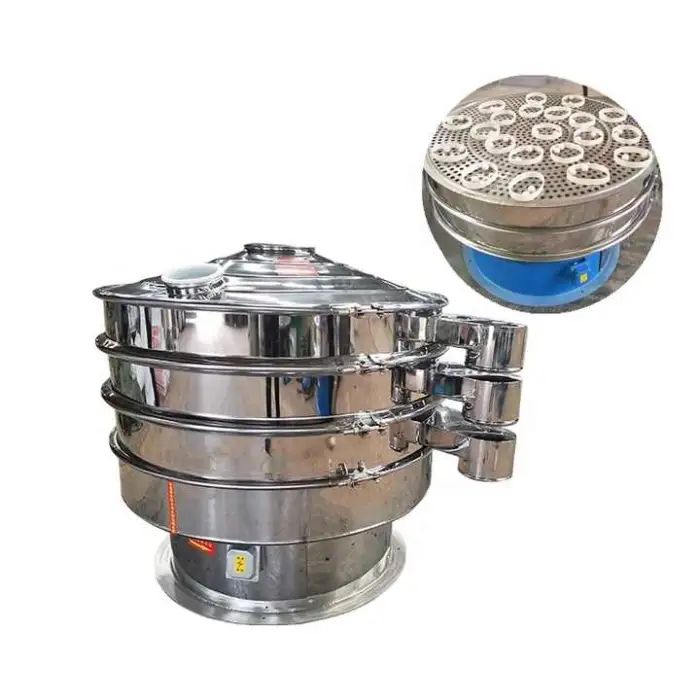
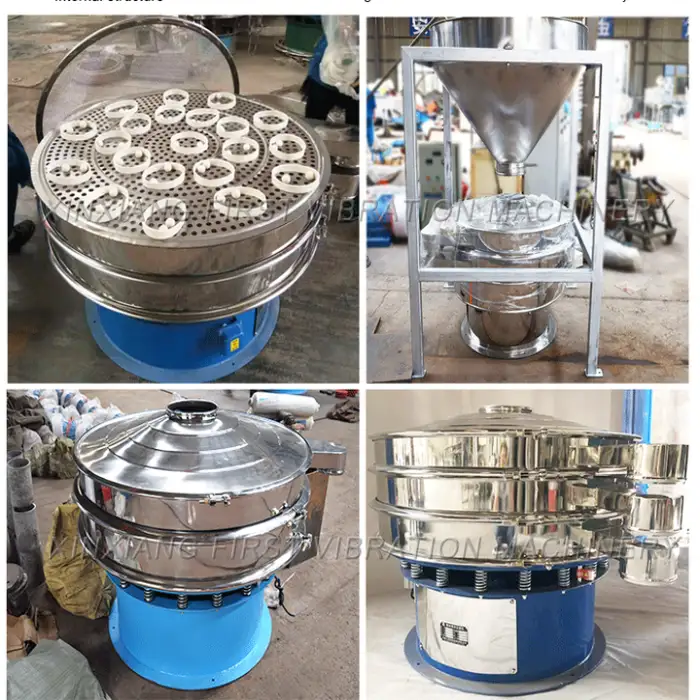
The Pineapple Juice Vibrating Screen is designed to efficiently separate and filter pineapple juice and other food products. This reliable machine uses a circular motion to ensure thorough screening. With customizable options, it meets various processing needs while maintaining quality and efficiency.
Specifications
| Attribute | Details |
|---|---|
| Type | Circular |
| Voltage | Support customization |
| Core Components | Motor |
| Weight | 110 KG |
| Video Outgoing Inspection | Provided |
| Machinery Test Report | Provided |
| Application | Food Processing |
| Dimension (L*W*H) | 850*650*650 mm |
| Keyword | Vibrating Screen For Worm |
| Layer(s) | 1-3 |
| Cleaning System | Jumping balls |
| Diameter | 800 mm |
| Screen Mesh | 2-325 mesh |
| Max Feeding Size | Within 30 mm |
| Outlet Size | 150 mm |
| Applicable Material | Glutinous rice flour sieving |
| Machine Material | Q235, SUS304, SUS316L |
| Selling Units | Single item |
| Single Package Size | 75X65X60 cm |
| Single Gross Weight | 65.000 KG |
Key Features
- Efficient circular design for optimal screening.
- Customizable voltage options available.
- Robust motor for reliable performance.
- Lightweight yet sturdy construction (110 KG).
- Includes jumping balls for an effective cleaning system.
Applications
- Filter and separate pineapple juice.
- Process other food items like glutinous rice flour.
- Used in various food processing industries.
- Ideal for both small and large scale operations.
Product Info Gallery
- Shipping Timeframes: All orders are processed within 2-5 business days (excluding weekends and holidays). After your order has been processed, the estimated delivery time is before 03 Aug, 2026, depending on customs, Please note that due to high demand, some items may experience longer shipping times, which will be communicated at order confirmation email.
- Order Processing Time: Please allow 2-5 business days for us to process your order before it is shipped . Orders placed after 16:00 on Fridays, or during weekends and public holidays, will begin processing on the next business day. Processing times may be extended during peak seasons or sales events.
- Manufacturing Time: Some products needs manufacturing time, the manufacturing process will take approximately 10-30 business days depending on the product. This timeframe may vary depending on the complexity of the product and current demand. but this will be communicated with you during order confirmation.
- Returns and Exchanges: We offer a 30-day return policy for most items. If you are not completely satisfied with your purchase, you may return it within 30 days of receipt for a refund or exchange. Items must be unused, in their original packaging, and accompanied by proof of purchase. Return shipping costs are the responsibility of the customer, unless the item was damaged or defective upon arrival.
1. What is the Pineapple Juice Vibrating Screen used for?
It's designed to separate and filter pineapple juice and other food products (e.g., glutinous rice flour), removing solids and impurities through circular vibration screening to improve product quality and consistency.
2. How does the circular motion screening work?
The machine uses an eccentric vibrator and circular motion to evenly distribute material across the screen mesh. This motion promotes efficient screening, prevents clogging, and enhances throughput and screening accuracy.
3. What screen mesh sizes are available?
Screen mesh options range from 2 to 325 mesh, allowing customization to meet different filtering fineness requirements. Choose mesh size based on particle size and desired filtration level.
4. What are the machine dimensions and weight?
Overall dimensions are approximately 850 × 650 × 650 mm. The listed net weight is about 110 kg. Packaged weight and shipping weight may vary—confirm final shipping weight with the supplier.
5. What materials is the machine made from?
The machine frame and contact parts are available in food-grade stainless steels (SUS304, SUS316L) and Q235 carbon steel, enabling hygienic operation and corrosion resistance for food processing.
6. How many screening layers can I choose?
The machine supports 1–3 layers, so you can select a single screen for coarse separation or multiple layers for staged, graded separation according to your process needs.
7. What is the maximum feeding size and outlet size?
Maximum recommended feed particle/agg size is within 30 mm. The outlet (discharge) diameter is 150 mm, suitable for direct connection to downstream piping or conveyors.
8. What is the cleaning system and how does it prevent clogging?
This model uses jumping balls (ball-cleaning) located under the screen to continuously strike the mesh during vibration, dislodging particles and preventing mesh blinding and clogging.
9. Can the voltage and electrical specifications be customized?
Yes — voltage and electrical configurations can be customized to meet regional power supply requirements. Contact the supplier with your local voltage/frequency for a matched motor and control setup.
10. Are outgoing inspection and machinery test reports provided?
Yes. The product listing indicates that an outgoing inspection and machinery test report are provided to verify performance and quality prior to shipment.
11. Is this machine suitable for food-grade and sanitary applications?
Yes, when specified with SUS304 or SUS316L contact parts, the unit is suitable for food processing. Choose stainless-steel finishes and hygienic options for easy cleaning and compliance with food safety requirements.
12. How do I install and mount the vibrating screen?
Installation typically requires a level, solid foundation or mounting frame. Use anti-vibration mounts or springs per supplier instructions, secure inlet/outlet connections, and ensure electrical wiring is completed by qualified personnel.
13. What routine maintenance is required?
Regular checks include inspecting screen mesh for wear, tightening fasteners, checking motor and bearings, cleaning the screen and jumping balls, and replacing consumable parts as needed. Follow supplier maintenance schedule for best results.
14. How do I determine throughput or capacity for my product?
Throughput depends on mesh size, product viscosity, feed rate and number of layers. Provide sample material to the supplier for trial screening or request test data; the supplier can estimate capacity for your specific application.
15. What spare parts and accessories are available?
Common spare parts include replacement screen meshes (various mesh sizes), jumping balls, bearings, springs, and vibration motors. Contact the supplier for a parts list, recommended spares, and lead times.
Latest Order Arrivals
Discover our latest orders

12 Heads Embroidery Machine

Toilet Paper Machine Machine

Order Collection

Cross Border Clients

Order cros border countries Collected

Industrial Machine Cllection

Agriculture Processing Machines

Ready for collection

Water Pump Equipment

Packaging Machine and accessories

Fabrics Manufacturing Equipment

Mining Equipments

Food Processing Machine

Batch of Orders

Batch of Orders

Latest Orders Labelled

wheel alignment machines

new arrivals

Pre Orders Offloading

Latest Arrivals

Latest Arrivals

Latest Arrivals

Loading

Toilet paper making machine

Toilet paper making machine

Toilet paper Rewinding Machine

latest arrivals

offloading

order success

order collection

order offloading