B21, China Town Mall, Midrand


Household Manual Feed Pellet Mill for Poultry & Livestock | Small Farm Granulator Model: 180

- Section : Machinery
- Category : Other Food Processing Machinery
- SKU : 1601300997256

Household Manual Feed Pellet Mill for Poultry & Livestock | Small Farm Granulator
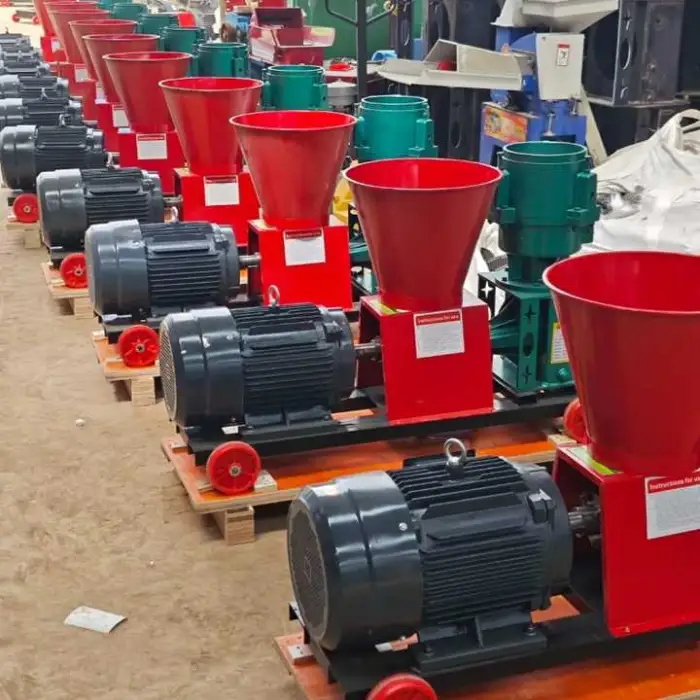
The Household Manual Feed Pellet Mill for Poultry & Livestock | Small Farm Granulatoris a perfect solution for creating your own animal feed. This machine is designed for farmers and households who want to make high-quality feed pellets for poultry and livestock. With a capacity of 200KG per hour, it helps you save time and money while ensuring your animals get the best nutrition.
Specifications
| Attribute | Details |
|---|---|
| Product Name | Pellet making machine |
| Condition | New |
| Capacity | 200KG/H |
| Weight | 85 kg |
| Brand Name | Longcheng |
| Voltage | 220V/380V |
| Dimension (L*W*H) | 920x340x810mm |
| Applicable Industries | Manufacturing Plant, Farms, Home Use, Retail |
| Selling Units | Single item |
Key Features
- Long service life for durability
- Efficient feed pellet production
- Compact design for easy use
- Suitable for various types of poultry and livestock
- Easy to operate and maintain
Applications
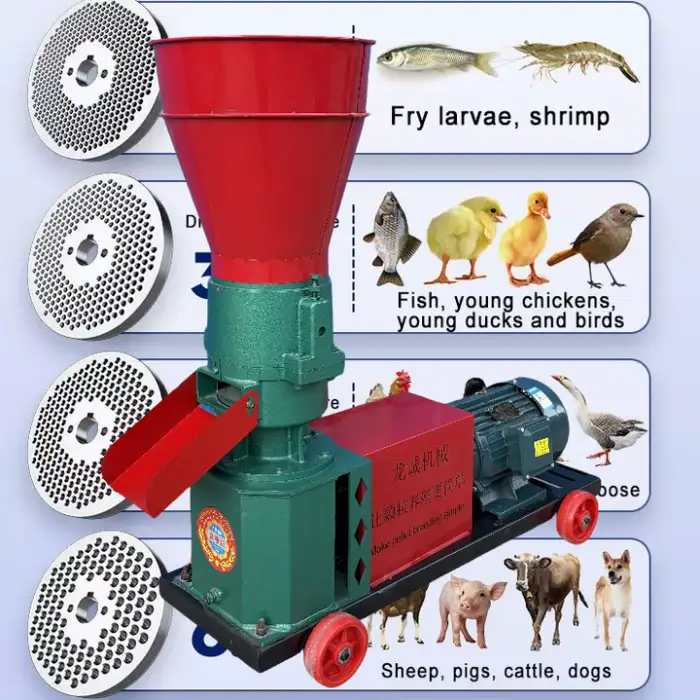
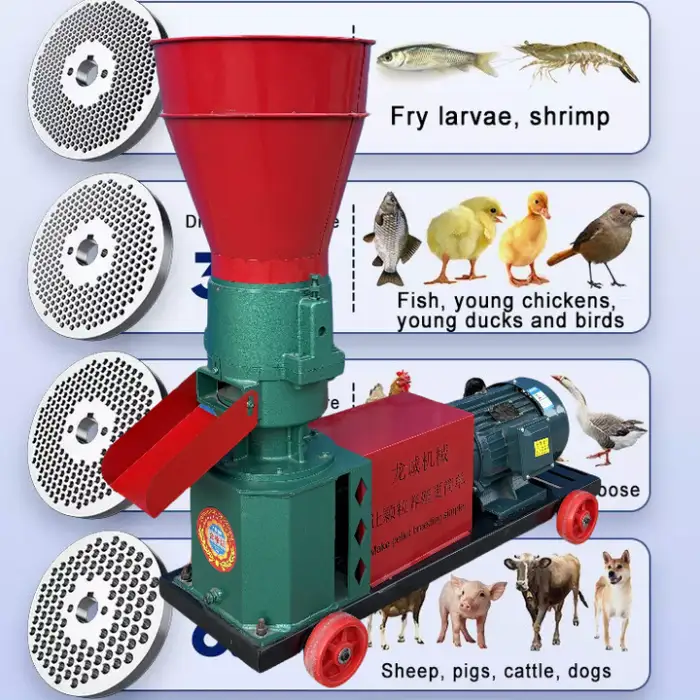
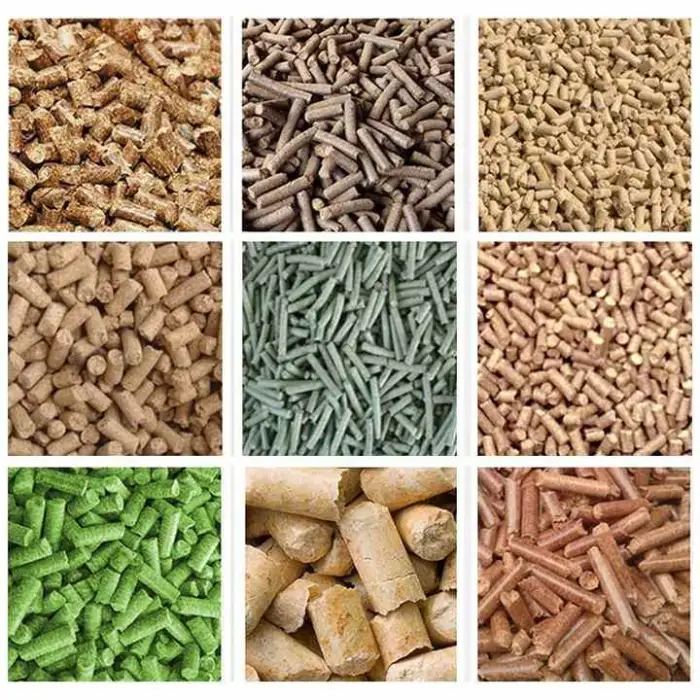
- Producing feed pellets for chickens, ducks, and other poultry
- Making feed for pigs, goats, and other livestock
- Home use for small farms or personal animals
- Retail for selling animal feed pellets
- Manufacturing plants needing consistent feed production
Product Info Gallery
- Shipping Timeframes: All orders are processed within 2-5 business days (excluding weekends and holidays). After your order has been processed, the estimated delivery time is before 03 Aug, 2026, depending on customs, Please note that due to high demand, some items may experience longer shipping times, which will be communicated at order confirmation email.
- Order Processing Time: Please allow 2-5 business days for us to process your order before it is shipped . Orders placed after 16:00 on Fridays, or during weekends and public holidays, will begin processing on the next business day. Processing times may be extended during peak seasons or sales events.
- Manufacturing Time: Some products needs manufacturing time, the manufacturing process will take approximately 10-30 business days depending on the product. This timeframe may vary depending on the complexity of the product and current demand. but this will be communicated with you during order confirmation.
- Returns and Exchanges: We offer a 30-day return policy for most items. If you are not completely satisfied with your purchase, you may return it within 30 days of receipt for a refund or exchange. Items must be unused, in their original packaging, and accompanied by proof of purchase. Return shipping costs are the responsibility of the customer, unless the item was damaged or defective upon arrival.
1. What is the production capacity of this pellet mill?
The rated capacity is 200 KG per hour. Actual output depends on raw material type, moisture content, pellet diameter, and whether a motor or manual crank is used.
2. Is this machine manual or electric?
The product is marketed as a household manual feed pellet mill but is offered in configurations that can be driven manually or fitted with an electric motor (specifications list 220V/380V). Check the specific listing or contact the seller to confirm which drive option is included.
3. Which animals is this pellet mill suitable for?
It is suitable for making feed pellets for poultry (chickens, ducks) and a variety of livestock (pigs, goats, sheep, cattle). Pellet size and formulation should be adjusted based on the species and age.
4. What raw materials can I use to make pellets?
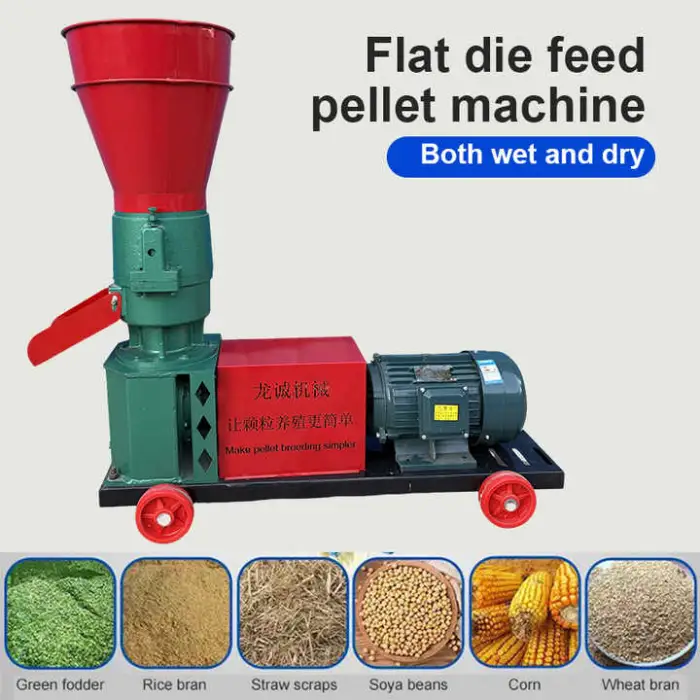
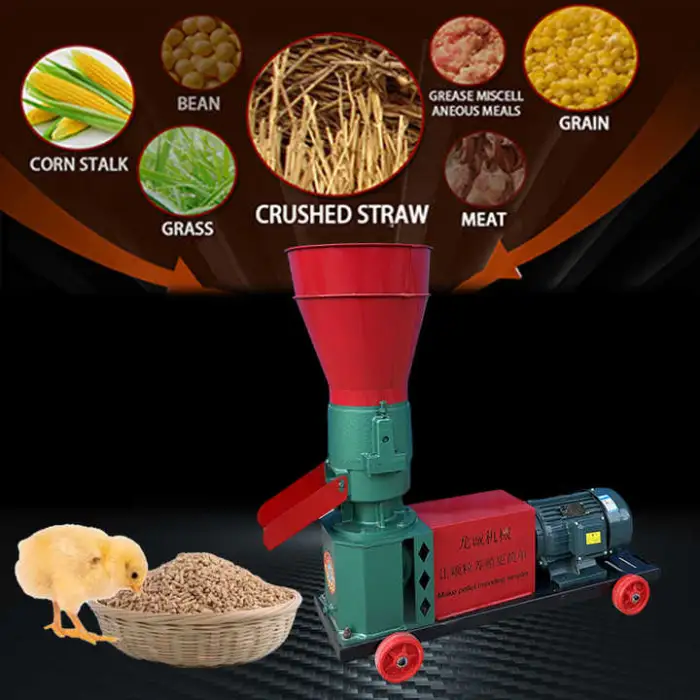
Common raw materials include corn, soybean meal, wheat, barley, sorghum, rice bran, alfalfa, grass/forage, straw (after suitable processing), and mixed compound feeds. Hard or fibrous materials should be ground or preprocessed first.
5. What pellet diameters are available and which should I use?
Dies commonly range from about 2 mm to 8 mm. Use 2–4 mm pellets for young poultry, 4–6 mm for adult poultry and small livestock, and 6–8 mm for larger livestock. Confirm available die sizes with the supplier.
6. What is the recommended moisture content for feed before pelleting?
For best results aim for a moisture content of roughly 12–18%, with many operators targeting 12–15% for optimal compression and pellet durability.
7. What are the machine dimensions and weight?
The machine dimensions are 920 x 340 x 810 mm (L x W x H) and it weighs approximately 85 kg.
8. What power supply is required for the electric version?
The electric versions are compatible with 220V or 380V supply options. Confirm the motor specification supplied with your unit before connecting to power.
9. How easy is assembly and installation?
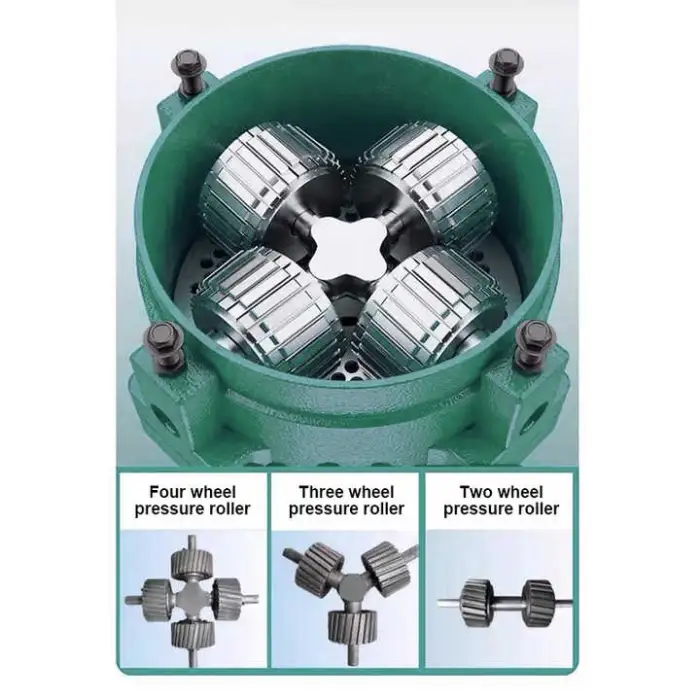
Assembly is generally straightforward: mount the unit on a stable surface, fit the selected die and rollers, and attach the manual crank or motor depending on the configuration. A user manual is typically provided; contact the seller for installation support if needed.
10. What routine maintenance does the pellet mill need?
Regular maintenance includes cleaning the die and pellet chamber after use, checking and lubricating bearings and moving parts, inspecting rollers and die for wear, and tightening fasteners. Replace worn dies/rollers to maintain pellet quality and throughput.
11. Are spare parts and different dies available?
Yes — dies, rollers, gaskets and other wear parts are normally available from the supplier. It’s a good idea to keep spare dies and rollers on hand if you plan heavy use.
12. How noisy is the machine and what safety precautions should I take?
Noise levels are moderate and vary with drive type and motor. Always wear hearing protection if necessary, keep loose clothing and hands away from moving parts, disconnect power or secure the crank before servicing, and follow the safety instructions in the manual.
13. Can I produce feed for commercial sale with this machine?
Yes — this mill can produce feed pellets suitable for small-scale retail or local sale. Ensure consistent pellet quality, proper labeling, and compliance with local feed regulations before selling commercially.
14. How can I improve pellet quality and production efficiency?
Key tips: grind raw materials to a consistent fine particle size, control moisture to 12–18%, use the appropriate die diameter for your animals, consider a pre-conditioner (steam or mixer) if available, maintain correct motor speed and feed rate, and keep dies/rollers in good condition.
15. What warranty and after-sales support are provided?
Warranty terms and after-sales support vary by supplier. Contact the seller or manufacturer for information on warranty period, spare part availability, technical support, and service policies.
Latest Order Arrivals
Discover our latest orders

12 Heads Embroidery Machine

Toilet Paper Machine Machine

Order Collection

Cross Border Clients

Order cros border countries Collected

Industrial Machine Cllection

Agriculture Processing Machines

Ready for collection

Water Pump Equipment

Packaging Machine and accessories

Fabrics Manufacturing Equipment

Mining Equipments

Food Processing Machine

Batch of Orders

Batch of Orders

Latest Orders Labelled

wheel alignment machines

new arrivals

Pre Orders Offloading

Latest Arrivals

Latest Arrivals

Latest Arrivals

Loading

Toilet paper making machine

Toilet paper making machine

Toilet paper Rewinding Machine

latest arrivals

offloading

order success

order collection

order offloading