B21, China Town Mall, Midrand


Funsun 20W 30W Direct Marking Fiber Laser Marking Machine for Mobile Watch Phones Metal
Asset finance available
Do you want funding for this equipment?
Afrimart can connect you with trusted funding partners who specialise in asset finance for businesses like yours. Compare options and apply in minutes — final approval is subject to provider review.
Check funding options
Secure & no obligation

- Section : Machinery
- Category : Industrial Machinery
- SKU : 1600538618352

Funsun 20W 30W Direct Marking Fiber Laser Marking Machine for Mobile Watch Phones Metal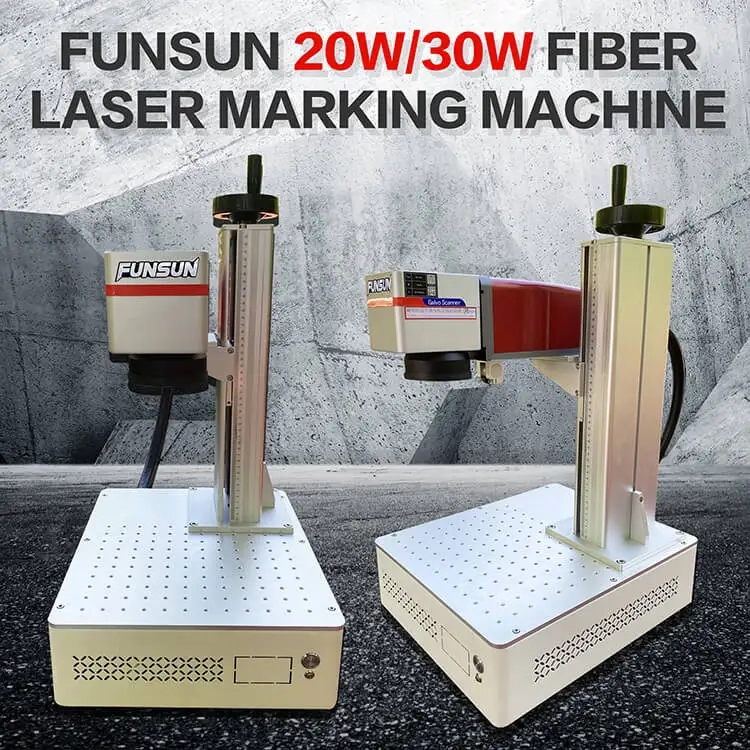


- Shipping Timeframes: All orders are processed within 2-5 business days (excluding weekends and holidays). After your order has been processed, the estimated delivery time is before 03 Aug, 2026, depending on customs, Please note that due to high demand, some items may experience longer shipping times, which will be communicated at order confirmation email.
- Order Processing Time: Please allow 2-5 business days for us to process your order before it is shipped . Orders placed after 16:00 on Fridays, or during weekends and public holidays, will begin processing on the next business day. Processing times may be extended during peak seasons or sales events.
- Manufacturing Time: Some products needs manufacturing time, the manufacturing process will take approximately 10-30 business days depending on the product. This timeframe may vary depending on the complexity of the product and current demand. but this will be communicated with you during order confirmation.
- Returns and Exchanges: We offer a 30-day return policy for most items. If you are not completely satisfied with your purchase, you may return it within 30 days of receipt for a refund or exchange. Items must be unused, in their original packaging, and accompanied by proof of purchase. Return shipping costs are the responsibility of the customer, unless the item was damaged or defective upon arrival.
1. What is the Funsun 20W/30W Direct Marking Fiber Laser Marking Machine?
A compact fiber laser marking system designed for direct marking and engraving on metal parts commonly used in mobile phones, watches and other small electronics. It is offered in 20W and 30W power variants for different speed and depth requirements.
2. What is the difference between the 20W and 30W models?
The 30W model delivers higher peak power for faster marking speeds and deeper marks on harder metals. The 20W model is typically sufficient for fine surface marking, anodized coatings and delicate parts where less heat input is preferred.
3. Which materials can this fiber laser mark?
Primarily metals: stainless steel, aluminum, titanium, copper, brass, gold, silver and plated metals. It can also mark some coated metals, ceramics and certain plastics (with appropriate settings). Compatibility depends on material composition and finish.
4. What marking depth and resolution can I expect?
Marking depth varies by material, power and settings; typical depths range from light surface annealing/oxidation to several tenths of a millimeter. Positional accuracy is commonly around ±0.01 mm, allowing for fine text and detailed logos.
5. What file formats and software are supported?
These machines generally support standard vector and raster formats such as DXF, PLT, AI, SVG, BMP, JPG and PNG. They commonly ship with EZCAD or similar laser-control software for layout, parametrization and job management.
6. How fast does the machine mark?
Marking speed depends on power, pulse settings, content complexity and material. Expect very fast throughput for simple text and logos (hundreds to thousands of mm/s equivalent). Exact speeds should be confirmed in the product datasheet or by test marking.
7. What are the power and cooling requirements?
Most desktop fiber laser markers are air-cooled and run from a single-phase AC mains supply (commonly 110–240V, 50/60Hz). Confirm the exact electrical and cooling specifications with the supplier before installation.
8. Is the machine safe to operate around people?
Fiber lasers are high-power devices (usually Class 4) and pose eye and skin hazards. Use appropriate laser safety measures: protective goggles rated for the laser wavelength, beam enclosures, key switches/interlocks and training for operators.
9. What maintenance does the machine require?
Fiber lasers are relatively low-maintenance. Regular tasks include keeping the optics and work area clean, checking and cleaning protective lenses, ensuring proper ventilation, and periodic inspection of cables and connectors. Follow the manufacturer's maintenance schedule.
10. Can the machine mark small and curved parts like watch cases and phone housings?
Yes. With the correct focusing optics, fixtures and jigs the machine can mark small, curved or irregular surfaces. Rotary attachments or special fixtures may be required for cylindrical parts.
11. What is the expected lifetime of the laser source?
Modern fiber laser sources commonly have lifetimes on the order of tens of thousands to around 100,000 hours, depending on operating conditions. Check the manufacturer's specification for the exact rated lifetime.
12. Are spare parts and consumables easy to obtain?
Common consumables include protective lenses and f-theta scan lenses; these and other spare parts are typically available through the manufacturer or authorized distributors. Availability may vary by region.
13. Does the machine come with warranty and technical support?
Most vendors provide a warranty (commonly 1 year) plus technical support and training options. Confirm warranty length, coverage details and support channels with the seller before purchase.
14. How do I get a sample mark to evaluate performance?
Contact the supplier with your artwork (vector/raster file) and representative material samples. Many vendors will run test marks and send photos or samples so you can verify quality, contrast and depth.
15. What accessories or options are available for marking phones and watches?
Common accessories include different focal-length f-theta lenses for varied marking areas, micro-focus heads for tiny details, rotary fixtures for cylindrical parts, custom jigs for small components, and enclosed safety cabinets for production environments.
Latest Order Arrivals
Discover our latest orders

12 Heads Embroidery Machine

Toilet Paper Machine Machine

Order Collection

Cross Border Clients

Order cros border countries Collected

Industrial Machine Cllection

Agriculture Processing Machines

Ready for collection

Water Pump Equipment

Packaging Machine and accessories

Fabrics Manufacturing Equipment

Mining Equipments

Food Processing Machine

Batch of Orders

Batch of Orders

Latest Orders Labelled

wheel alignment machines

new arrivals

Pre Orders Offloading

Latest Arrivals

Latest Arrivals

Latest Arrivals

Loading

Toilet paper making machine

Toilet paper making machine

Toilet paper Rewinding Machine

latest arrivals

offloading

order success

order collection

order offloading