B21, China Town Mall, Midrand

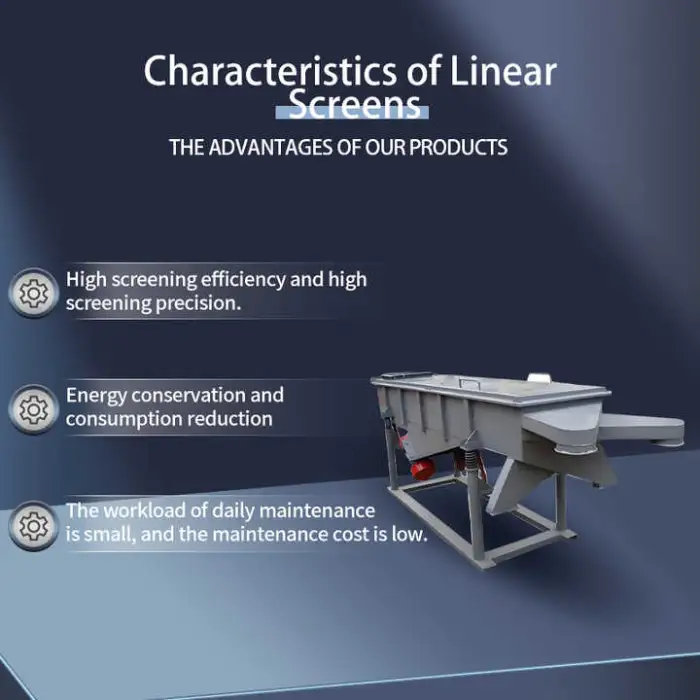
Building Materials Stabilized Automatic Dual Motor Limestone Linear Vibrating Screen
Asset finance available
Do you want funding for this equipment?
Afrimart can connect you with trusted funding partners who specialise in asset finance for businesses like yours. Compare options and apply in minutes — final approval is subject to provider review.
Check funding options
Secure & no obligation

- Section : Machinery
- Category : Other Construction Machinery
- SKU : 1601447752673

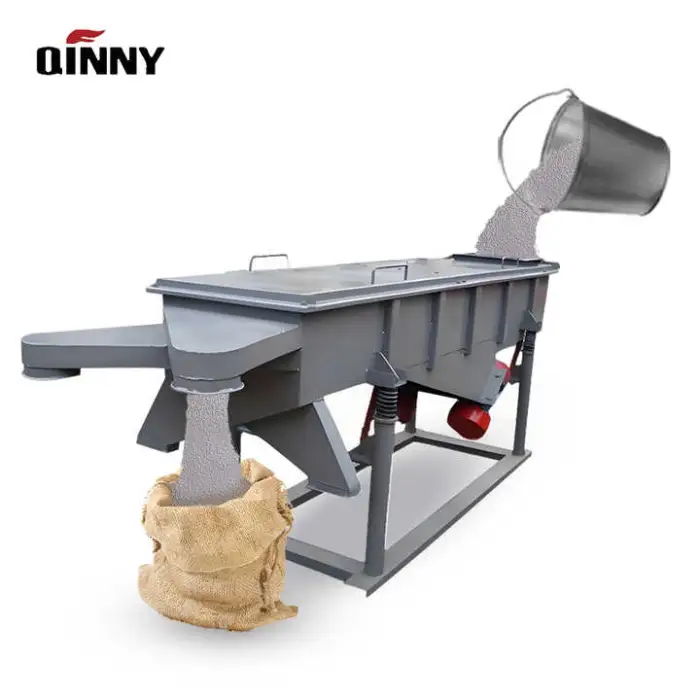
Building Materials Stabilized Automatic Dual Motor Limestone Linear Vibrating Screen
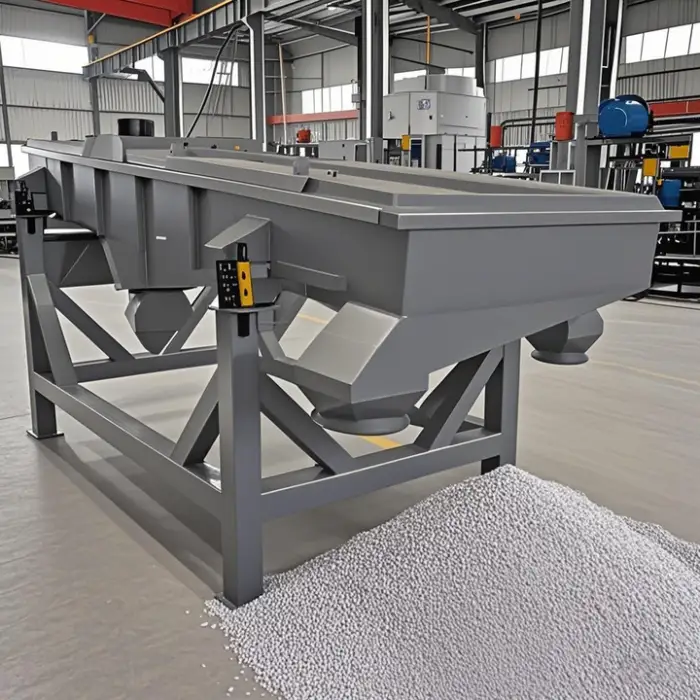
The Building Materials Stabilized Automatic Dual Motor Limestone Linear Vibrating Screen is a reliable and efficient machine designed for screening various materials. It features dual motors that enhance its performance, making it ideal for different industrial applications. With customizable options and robust construction, this vibrating screen is perfect for your material handling needs.
Specifications
| Attribute | Details |
|---|---|
| Type | LINEAR |
| Voltage | 380V, 220V |
| Core Components | Motor |
| Weight | 500 KG |
| Video Outgoing Inspection | Provided |
| Machinery Test Report | Not Available |
| Application | Ore |
| Brand Name | QINNY |
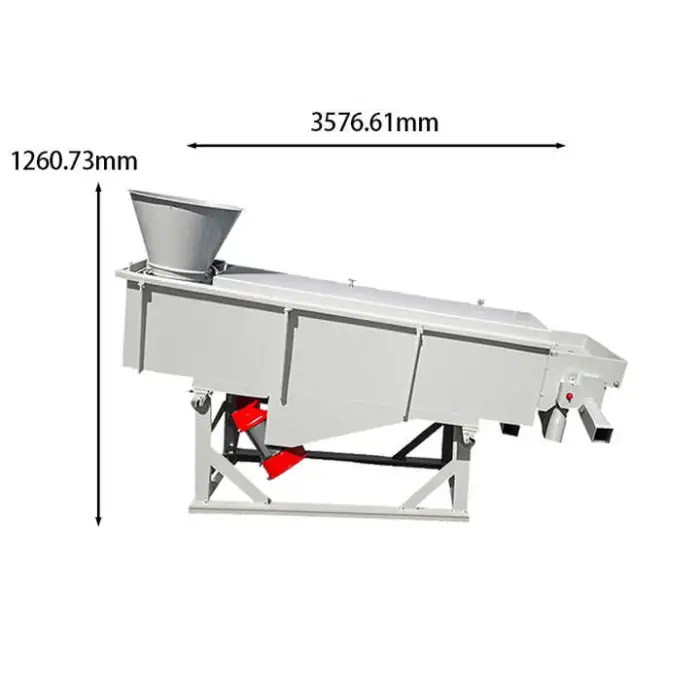
| Dimension (L*W*H) | 3576.61*1230*1261 |
| Motor | Dual Motor |
| Screen Deck | 1-6 layers Customizable |
| Selling Units | Single item |
Key Features
- Stabilized performance for consistent results.
- Automatic operation for ease of use.
- Dual motor system for enhanced efficiency.
- Customizable screen decks for various applications.
- Durable construction using stainless steel or carbon steel.
- Compact design for easy installation in limited spaces.
Applications
- Ideal for ore screening in mining operations.
- Used in building materials processing.
- Suitable for recycling applications.
- Effective in food processing industries.
- Can be used in chemical production facilities.
Product Info Gallery
- Shipping Timeframes: All orders are processed within 2-5 business days (excluding weekends and holidays). After your order has been processed, the estimated delivery time is before 04 Aug, 2026, depending on customs, Please note that due to high demand, some items may experience longer shipping times, which will be communicated at order confirmation email.
- Order Processing Time: Please allow 2-5 business days for us to process your order before it is shipped . Orders placed after 16:00 on Fridays, or during weekends and public holidays, will begin processing on the next business day. Processing times may be extended during peak seasons or sales events.
- Manufacturing Time: Some products needs manufacturing time, the manufacturing process will take approximately 10-30 business days depending on the product. This timeframe may vary depending on the complexity of the product and current demand. but this will be communicated with you during order confirmation.
- Returns and Exchanges: We offer a 30-day return policy for most items. If you are not completely satisfied with your purchase, you may return it within 30 days of receipt for a refund or exchange. Items must be unused, in their original packaging, and accompanied by proof of purchase. Return shipping costs are the responsibility of the customer, unless the item was damaged or defective upon arrival.
1. What is the Building Materials Stabilized Automatic Dual Motor Limestone Linear Vibrating Screen used for?
It is a linear vibrating screen designed for grading and separating bulk materials. Typical applications include ore screening in mining, building materials processing, recycling, food processing, and certain chemical production tasks.
2. What does 'dual motor' and 'linear' mean for this screen?
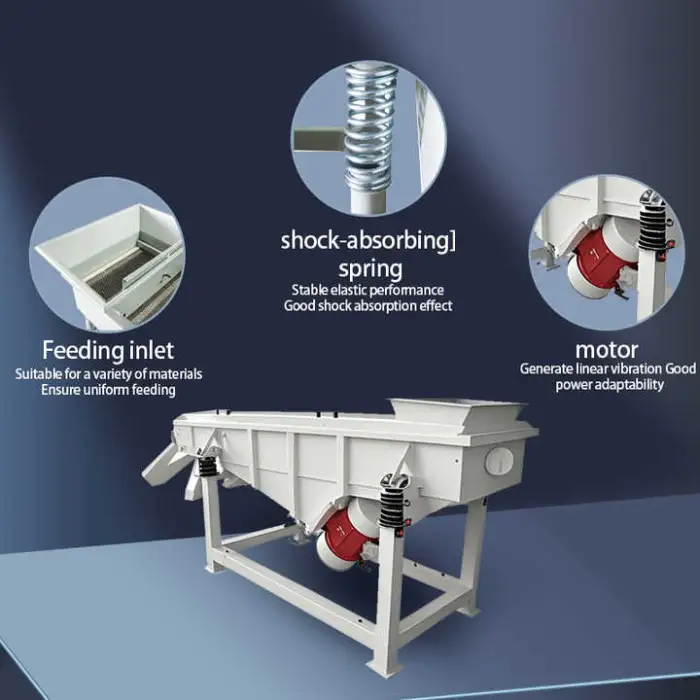
Dual motors are mounted to create a synchronized vibration that produces a linear motion of the screen deck. This linear motion is ideal for efficient conveying and sieving of particles with stable screening performance.
3. What voltages and electrical requirements does the machine support?
Standard voltage options listed are 380V and 220V. 380V is commonly three-phase in industrial installations. Exact motor power and electrical wiring details depend on the selected motor specification — confirm final requirements with the supplier before installation.
4. How many screen decks can it have and can they be customized?
Screen decks are customizable from 1 up to 6 layers. You can choose the number of decks, screen media (wire mesh, polyurethane, etc.), and aperture sizes based on your material and desired size fractions.
5. What materials are used for construction?
The machine is available in stainless steel or carbon steel construction. Material choice depends on application, corrosion resistance requirements and hygiene standards (e.g., food industry prefers stainless steel).
6. What are the unit dimensions and weight?
Listed overall dimensions are approximately 3576.61 mm (L) x 1230 mm (W) x 1261 mm (H). The machine weight is around 500 kg. Final dimensions may vary slightly depending on customization.
7. What screening capacity and throughput can I expect?
Throughput depends on material density, particle size distribution, moisture content, chosen deck count and aperture, and operating vibration settings. Because capacity varies by application, contact the supplier with sample material or process requirements for estimated throughput and testing.
8. Is there any quality inspection or test documentation provided?
A video outgoing inspection is provided with shipments. A formal machinery test report is not listed as standard — you can request additional factory testing or documentation when ordering.
9. Can the machine operate automatically and what control options are available?
The product is described as having automatic operation. Typical automation options include start/stop controls, PLC integration, level sensors and variable frequency drives (VFDs) for adjusting vibration intensity. Confirm which automation features are included or optional when ordering.
10. What maintenance is required and what spare parts should I keep on hand?
Regular maintenance includes inspecting and lubricating bearings, checking motor couplings and fasteners, examining and replacing worn screen media, and verifying vibration isolators. Common spare parts to keep: screen panels, bearings, springs or isolators, drive belts/couplings and motor-related parts. Follow the supplier's maintenance schedule.
11. How should the machine be installed and what foundation is required?
Installation typically requires a level, rigid mounting surface with appropriate anchor points for isolators or springs. Space should be allowed for access and maintenance. Exact foundation or mounting requirements depend on configuration — request installation drawings and anchoring details from the manufacturer.
12. How is vibration and noise managed?
Linear vibrating screens produce vibration and some noise. Management options include spring or rubber isolators, anti-vibration mounts, acoustic enclosures, and proper foundation design. Selecting appropriate isolation and maintenance reduces transmitted vibration and noise levels.
13. Can this screen handle wet or sticky materials?
It can handle some wet materials, but performance depends on screen media selection and deck design. For sticky or cohesive materials, specialized coatings, anti-blinding inserts, or different screen types (e.g., punch plate or polyurethane) may be recommended. Discuss material characteristics with the supplier to choose the best configuration.
14. What safety features should be provided or installed?
Recommended safety measures include guards around moving parts, emergency stop switches, lockable electrical panels, proper grounding, and clear operator access for maintenance. Ensure the installation meets local safety regulations and standards.
15. How do I get pricing, lead time, and shipping details?
Because the unit is customizable (deck count, materials, control options), request a quote from the supplier with your required configuration and application details. Provide destination, desired options and any testing or documentation needs to receive accurate pricing, lead time and shipping information. Note: the product sells as a single item and is approximately 500 kg.
Latest Order Arrivals
Discover our latest orders

12 Heads Embroidery Machine

Toilet Paper Machine Machine

Order Collection

Cross Border Clients

Order cros border countries Collected

Industrial Machine Cllection

Agriculture Processing Machines

Ready for collection

Water Pump Equipment

Packaging Machine and accessories

Fabrics Manufacturing Equipment

Mining Equipments

Food Processing Machine

Batch of Orders

Batch of Orders

Latest Orders Labelled

wheel alignment machines

new arrivals

Pre Orders Offloading

Latest Arrivals

Latest Arrivals

Latest Arrivals

Loading

Toilet paper making machine

Toilet paper making machine

Toilet paper Rewinding Machine

latest arrivals

offloading

order success

order collection

order offloading