B21, China Town Mall, Midrand


Bamboo Fruit Vegetable Washing Machine
Asset finance available
Do you want funding for this equipment?
Afrimart can connect you with trusted funding partners who specialise in asset finance for businesses like yours. Compare options and apply in minutes — final approval is subject to provider review.
Check funding options
Secure & no obligation

- Section : Machinery
- Category : Industrial Machinery
- SKU : 62360902387

Bamboo Fruit Vegetable Washing Machine
The Fruit Vegetable Washing Machine is an essential tool for anyone involved in food processing. Designed for efficiency, this machine provides a thorough wash for various fruits and vegetables, ensuring they are clean and safe for consumption.
Key Features
High Capacity: This machine can wash between 500 to 1000 kg of produce per hour, making it ideal for commercial use.
Durable Construction: Made from 304 stainless steel, it is resistant to corrosion and easy to maintain, ensuring long-lasting performance.
Powerful Motor: With a power rating of 2.2KW, it operates efficiently while effectively cleaning produce.
Compact Size: Measuring 2800x1200x1300mm and weighing 380 kg, it fits well in most production environments without taking up excessive space.
Versatile Usage: Suitable for washing a variety of raw materials including fruits and vegetables, this machine is perfect for various food processing operations.
Related Machinery Compatibility: It can be integrated with cutting machines and juicing machines for a complete food processing line.
In summary, the Fruit Vegetable Washing Machine offers an easy and efficient way to clean produce, meeting international quality standards and ensuring a safe product for consumers.
Product Info Gallery
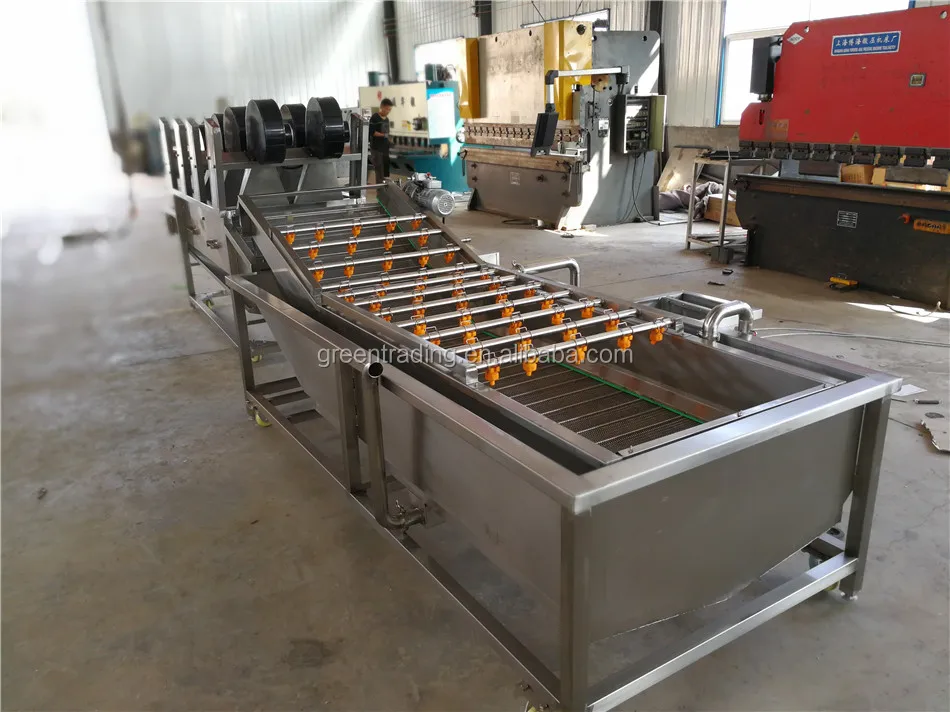
| MODEL | GM-2500 |
| POWER | 2.2KW |
| CAPACITY | 300-500KG/H |
| WEIGHT | 380KG |
| DIMENSION | 2800X1200X1300MM |
| MATERIAL | 304 STAINLESS STEEL |

- Shipping Timeframes: All orders are processed within 2-5 business days (excluding weekends and holidays). After your order has been processed, the estimated delivery time is before 03 Aug, 2026, depending on customs, Please note that due to high demand, some items may experience longer shipping times, which will be communicated at order confirmation email.
- Order Processing Time: Please allow 2-5 business days for us to process your order before it is shipped . Orders placed after 16:00 on Fridays, or during weekends and public holidays, will begin processing on the next business day. Processing times may be extended during peak seasons or sales events.
- Manufacturing Time: Some products needs manufacturing time, the manufacturing process will take approximately 10-30 business days depending on the product. This timeframe may vary depending on the complexity of the product and current demand. but this will be communicated with you during order confirmation.
- Returns and Exchanges: We offer a 30-day return policy for most items. If you are not completely satisfied with your purchase, you may return it within 30 days of receipt for a refund or exchange. Items must be unused, in their original packaging, and accompanied by proof of purchase. Return shipping costs are the responsibility of the customer, unless the item was damaged or defective upon arrival.
1. What is the washing capacity of the Bamboo Fruit Vegetable Washing Machine?
Capacity varies by model and by the type/condition of produce. The GM-2500 specification lists 300–500 kg/hour; some configurations for commercial lines can be rated higher (vendor-specified ranges up to 500–1000 kg/hour). Confirm the exact capacity with your supplier for the model you plan to buy.
2. What are the machine dimensions and weight?
Overall dimensions are 2800 x 1200 x 1300 mm and the machine weight is approximately 380 kg (per the GM-2500 specification).
3. What material is the machine made from?
The machine is constructed from 304 stainless steel, a common food-grade material that is corrosion resistant and easy to clean.
4. What is the motor power and electrical requirement?
The listed motor power is 2.2 kW. Exact electrical requirements (voltage, phase, and frequency) depend on the region and your chosen configuration—confirm the required power supply with the manufacturer or distributor before installation.
5. Which fruits and vegetables can this machine wash?
It is suitable for a wide variety of raw fruits and vegetables, including leafy greens, root vegetables, tubers, and many types of fruit. For very delicate items (e.g., soft berries) or unusually shaped produce, test a sample to confirm suitability.
6. How does the machine clean produce?
The machine is designed to provide a thorough wash using a combination of water flow and agitation engineered for produce cleaning. Specific washing methods and internal fittings can vary by model—ask the supplier for details on the mechanism for the unit you’re considering.
7. Can this washing machine be integrated into an existing production line?
Yes. The machine is compatible with cutting machines, juicing machines, and other processing equipment and can be integrated into a continuous production line. Discuss required conveyors, infeed/outfeed heights, and control interfaces with your supplier for seamless integration.
8. What space and utilities are required for installation?
Plan for a level, well-drained floor space that accommodates the machine footprint plus working clearance. You will need an appropriate electrical supply (per the model’s specs), a clean water supply, and a drainage connection. Exact utility hookups should be confirmed with the manufacturer or installer.
9. How should the machine be cleaned and maintained?
Perform daily rinsing and regular sanitization of contact surfaces, inspect and clean filters and nozzles, check seals and conveyor components for wear, and follow the manufacturer’s maintenance schedule for lubrication and parts replacement. Always disconnect power before maintenance.
10. What spare parts and after-sales support are available?
Common service parts include motors, belts, seals, bearings, and electrical components. Availability of parts, lead times, and service contracts vary by supplier—confirm spare parts availability and support options before purchase.
11. Will the machine damage delicate produce?
The machine is designed for gentle but effective cleaning, and many models offer adjustable settings to reduce agitation. For very delicate items, trial runs and adjustments to water flow and loading density are recommended to minimize bruising.
12. Does throughput change depending on the type of produce?
Yes. Throughput is affected by produce size, shape, packing density, and how dirty the items are. Root vegetables with heavy soil or large bulky fruit will typically reduce hourly throughput compared with clean, uniform produce.
13. Does this machine meet food safety or industry standards?
The use of 304 stainless steel aligns with common food-industry material standards for hygiene and corrosion resistance. For specific certifications (e.g., CE, NSF, or local standards), request documentation from the supplier as certification varies by model and region.
14. Can the machine be customized?
Many suppliers offer customization options such as different conveyor lengths/heights, control panels (manual to PLC/automated), additional rinsing or disinfecting stages, and integration features. Discuss your processing requirements with the manufacturer to explore options.
15. How do I purchase or get a quote for the Bamboo Fruit Vegetable Washing Machine?
Contact an authorized dealer or the manufacturer with your processing capacity needs, utility information, and any integration or customization requirements. They can provide model options, formal quotations, lead times, and shipping/installation services.
Latest Order Arrivals
Discover our latest orders

12 Heads Embroidery Machine

Toilet Paper Machine Machine

Order Collection

Cross Border Clients

Order cros border countries Collected

Industrial Machine Cllection

Agriculture Processing Machines

Ready for collection

Water Pump Equipment

Packaging Machine and accessories

Fabrics Manufacturing Equipment

Mining Equipments

Food Processing Machine

Batch of Orders

Batch of Orders

Latest Orders Labelled

wheel alignment machines

new arrivals

Pre Orders Offloading

Latest Arrivals

Latest Arrivals

Latest Arrivals

Loading

Toilet paper making machine

Toilet paper making machine

Toilet paper Rewinding Machine

latest arrivals

offloading

order success

order collection

order offloading