B21, China Town Mall, Midrand

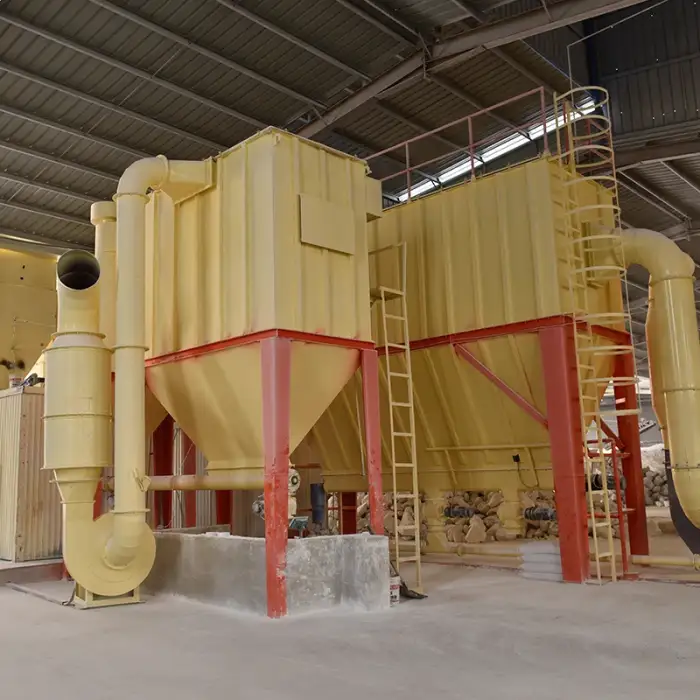
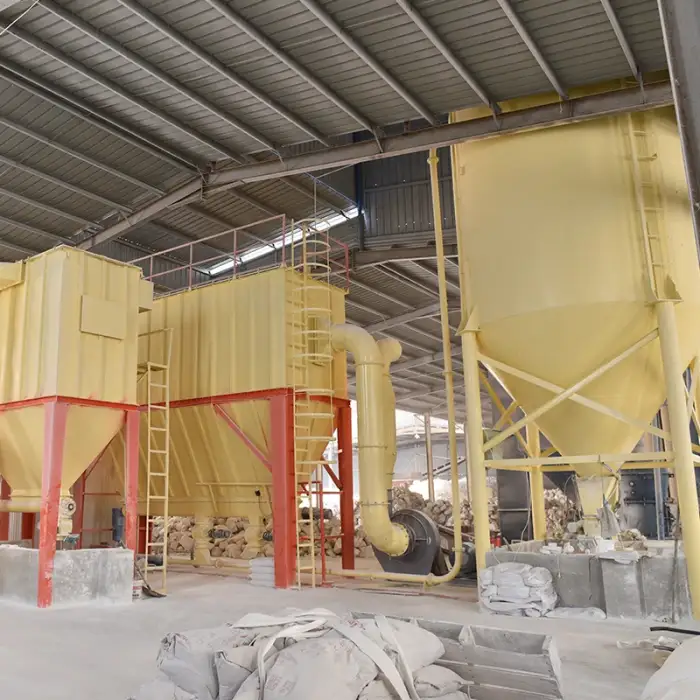
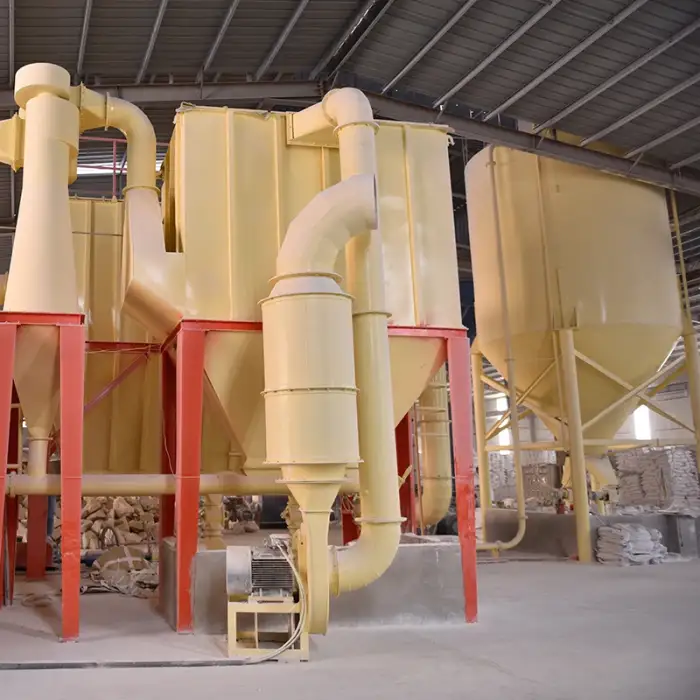
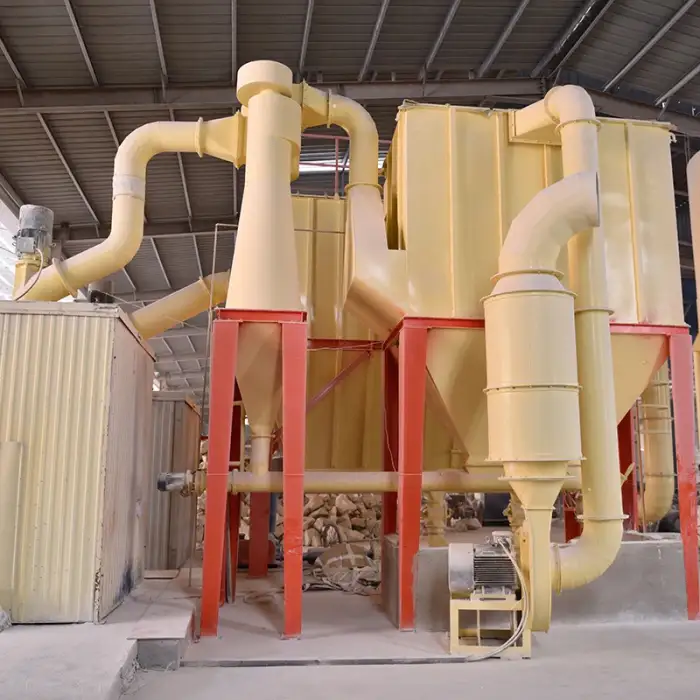
Raymond Mill Fine Powder Processing Machine Mineral Equipment With Capacity 10-35 Tph
Asset finance available
Do you want funding for this equipment?
Afrimart can connect you with trusted funding partners who specialise in asset finance for businesses like yours. Compare options and apply in minutes — final approval is subject to provider review.
Check funding options
Secure & no obligation

- Section : Machinery
- Category : Chemical Machinery
- SKU : 1601173572542

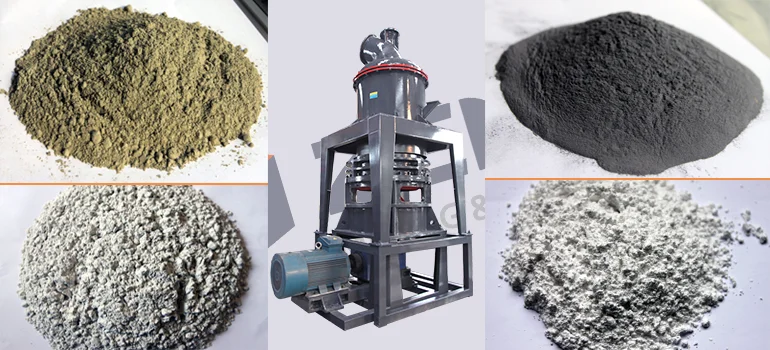
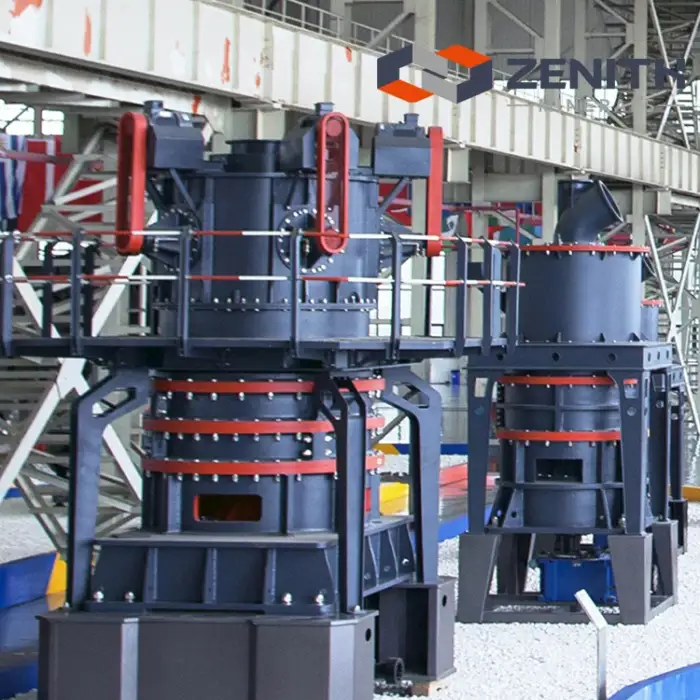
Inside the intelligent micro-grinding system, multiple grinding chambers equipped with centrifugal micro-fluitization technology pulverizes stones into uniform ultra-micro particles. Unlike other mills, it ensures over 90% of products are below 2500mesh.
Processing up to 1-5 tons per hour depending on feed material, the machine guarantees large-volume manufacturing of high-value super fine powders. Automated functions optimize milling efficiency while lowering operating costs.
Backed by its industry-leading fineness capabilities, contact ZENITH to boost output of your micro-scale production. The grinding mill sets a new standard for industrial ultra-fine powder generation.
Use Range: can be used in more than 300 kinds of stone materials powder grinding, such as: calcite, calcium carbonate, dolomite, gypsum, carbon black, gypsum, kaolin, marble and so on

Product Description
China Famous Small Raymond Mill Fine Powder Processing Machine Mineral Equipment With Capacity 10-35 Tph Advantages
Ultrafine Powder
The fineness can be adjusted between 325-2500 meshes, and the screening rate can achieve D97≤5μm once. | Higher Capacity With the same fineness and power, the capacity is 40% higher than that of jet grinding mill and stirred mill, and the yield is twice as large as that of ball mill. |
| Continuous Operation The lubricating device is installed outside of the main shaft, so that lubrication without shutdown can be realized, and the production can be continued for 24h. | Eco-friendly Production Silencer and noise elimination room are configured to reduce noises. Besides, the operation is organized by conforming to national environmental protection standards. |


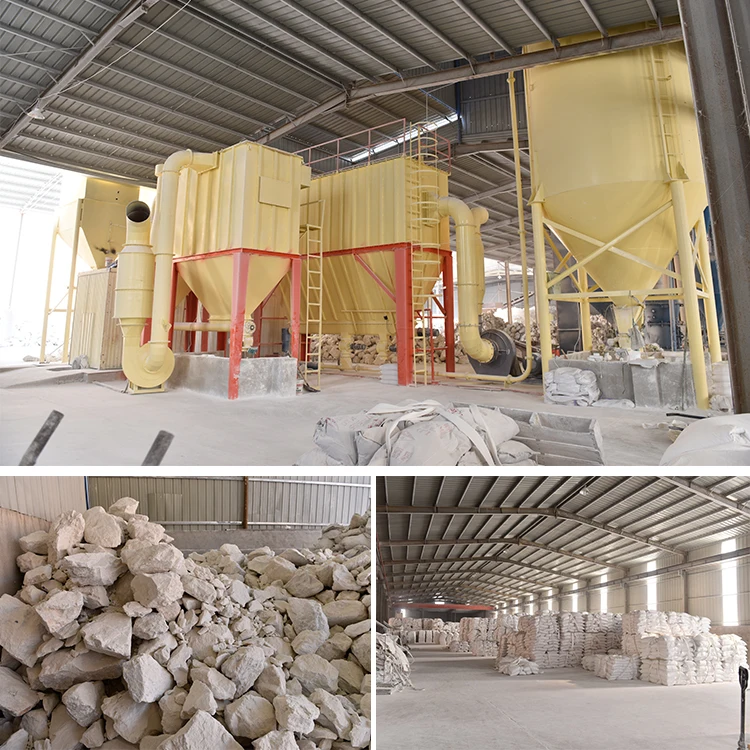


fine powder processing machine introduction:
Zenith fine powder processing machine is widely used in making fine powder or micro powder, a new kind of machine for producing ultrafine powder. grinding machines in pakistan is mainly used for grinding the material with middle and low hardness, moisture below 6%, and the material should be non-explosive and non-flammable, such as: calcite, chalk, limestone, dolomite, kaolin, bentonite, steatite, mica, magnetite, iolite, pyrophillite, vermiculite, meerschaum, attapulgite, diatomite, barite, gypsum, alunite, graphite, fluorite, phosphate ore, potassium ore pumice, etc. The size of the finished product from fine grinder pulverizers can be adjusted between 325-2500 mesh.

fine powder processing machine working principle
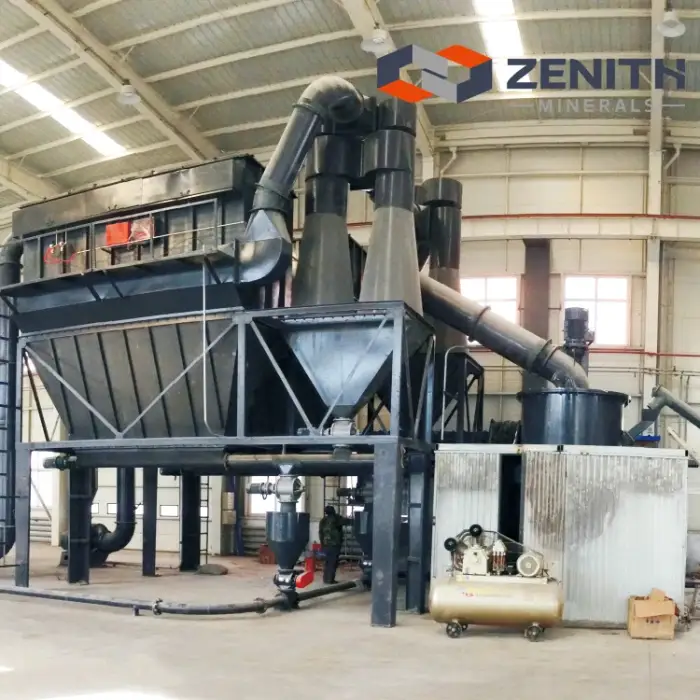
After crushed by hammer crusher, the large materials become small ones and are sent to storage hopper by elevator, edge of then evenly sent to the upper distribution plate of the turnplate by vibrating feeder and sloping feeding pipe. When the grinding machines in pakistan is at work, all the grinding rollers are rolling in the ring, and the materials are driven to the edge of the turnplate by the centrifugal force and fall down into the grinding chambers where the materials are repeatedly pressed, crushed and grinded by the rollers.The high-pressure air blowepowder gypsum production liner constantly inhales air within the grinding machines in pakistan and, in turn, the air flow with crushed materials are brought to the classifier whose high-speed impeller will screen the airflow: the unqualified particle size will fall and return to the grinding machines in pakistan for being reground while the qualified particle size mixed with air will go into the cyclone powder collector. of the qualified powders will fall an exit from the discharging valve at the bottom; a small proportion of the fine powders, with airflow, moves to the dust cleaner, and clings to the surface of the filter bags. At the same time, the fine powders clinging to the surface fall down by the sudden vibration of the filter bags, which is caused by the instantly ejected high-pressure gas controlled by the pulse valve. The materials from the above two lots are sent by the conveyor at the bottom to get finished powders packed. In addition, filtered clean air will be emitted from the air outlet of muffler in the end.

fine powder processing machine Features:
1.High pressure spring design.
2.Smoothly vibration reduce design
3.Convenient vane adjust design.
4.The machine has a strong material applicability , which suits for many kinds of material whose Moh’s hardness is less than 9.3.
5.Grinding device adopts superimposed multistage seal, sealed performance is good.
fine powder processing machine application
fine powder processing machine is widely used in many industrial fields, such as building, chemical, chemical fertilizer, metallurgy, mining, nonmetal,abrasive, bearing materials, ceramic, steel, thermal power, bricks & tiles, coal industry, etc. It can grind these materials which are 9 or less on the Meshesscale, and moisture is below 6%., and they should be non-explosive and non-flammable mining materials. The final size can be adjusted from 30 to 400 meshes easily.There are thousands of materials our mtm power can grind.

fine powder processing machine Technical Data:
| Model | Number of roller (piece) | Ring diameter (mm) | Number of ring (piece) | Max. inlet size (mm) | Final size (mesh) | Capacity (kg/h) | Main equipment rotate speed (r/min) |
| XZM221 | 21 | Φ800 | 3 | ≤10 | 325-2500 | 600-5500 | 235 |
| XZM224 | 24 | Φ900 | 3 | ≤20 | 325-2500 | 700-5500 | 235 |
| XZM236 | 36 | Φ1000 | 4 | ≤20 | 325-2500 | 700-7500 | 235 |
| Basic data | Item | Unit | specification | ||
| XZM221 | XZM224 | XZM236 | |||
| Motor of main machine | Model | - | Y250M-4 | Y280S-8 | Y2-315L-6 |
| Power | kw | 55 | 37×2 | 110 | |
| Speed-adjustable motor | Model | - | Y180M-4 | Y180L-4 | Y2VP200L-4 |
| Power | kw | 18.5 | 22 | 30 | |
| Motor of elevator | Model | - | Y100L-4 | Y100L-4 | Y100L-4 |
| Power | kw | 3 | 3 | 3 | |
| Motor of blower | Model | - | Y225M-2 | Y225M-2 | Y280S-2 |
| Power | kw | 45 | 55 | 90 | |
| Hammer crusher | Model | - | PC300*400 | PC300*400 | PC400*600 |
| Power | kw | 11 | 11 | 18.5 | |
| Electromagnetic Vibrating feeder | Model | - | GZ1F | GZ1F | GZIF |
| Power | kw | 0.06 | 0.06 | 0.06 | |
| Discharge valve | Model | - | ZJD-200 | ZJD-200 | ZJD-200 |
| Power | kw | 0.75 | 0.75 | 0.75 | |
| Note: If there is any change of above specification, it is all according to the booklet with machine. |
- Shipping Timeframes: All orders are processed within 2-5 business days (excluding weekends and holidays). After your order has been processed, the estimated delivery time is before 04 Aug, 2026, depending on customs, Please note that due to high demand, some items may experience longer shipping times, which will be communicated at order confirmation email.
- Order Processing Time: Please allow 2-5 business days for us to process your order before it is shipped . Orders placed after 16:00 on Fridays, or during weekends and public holidays, will begin processing on the next business day. Processing times may be extended during peak seasons or sales events.
- Manufacturing Time: Some products needs manufacturing time, the manufacturing process will take approximately 10-30 business days depending on the product. This timeframe may vary depending on the complexity of the product and current demand. but this will be communicated with you during order confirmation.
- Returns and Exchanges: We offer a 30-day return policy for most items. If you are not completely satisfied with your purchase, you may return it within 30 days of receipt for a refund or exchange. Items must be unused, in their original packaging, and accompanied by proof of purchase. Return shipping costs are the responsibility of the customer, unless the item was damaged or defective upon arrival.
1. What is the capacity of the Raymond Mill Fine Powder Processing Machine?
The Raymond Mill Fine Powder Processing Machine has a capacity ranging from 10 to 35 tons per hour, depending on the feed material.
2. What types of materials can be processed with this machine?
This machine can process more than 300 kinds of stone materials, including calcite, calcium carbonate, dolomite, gypsum, carbon black, kaolin, marble, and many others.
3. What is the fineness range of the powder produced?
The fineness of the powder produced can be adjusted between 325 to 2500 meshes, ensuring a high level of customization.
4. How does the machine ensure uniform particle size?
The machine utilizes centrifugal micro-fluitization technology and multiple grinding chambers to pulverize stones into uniform ultra-micro particles, with over 90% of products below 2500 mesh.
5. Can the machine operate continuously?
Yes, the machine features an external lubricating device that allows for lubrication without shutdown, enabling continuous operation for up to 24 hours.
6. Is the machine environmentally friendly?
Yes, the machine is designed with eco-friendly features, including a silencer and noise elimination room to reduce noise levels and comply with national environmental protection standards.
7. What is the difference between this machine and other types of mills?
Compared to jet grinding mills and stirred mills, this machine has a 40% higher capacity at the same fineness and power, and it produces twice the yield of a ball mill.
8. What industries can benefit from using this fine powder processing machine?
This machine is widely used in various industries, including building, chemical, metallurgy, mining, ceramics, and more, suitable for materials with a Moh's hardness of less than 9.3.
9. What is the working principle of the Raymond Mill?
The working principle involves crushing materials with a hammer crusher, sending them to a storage hopper, and then grinding them in multiple chambers using rollers, followed by classifying the airflow to separate finished powders.
10. What maintenance is required for the machine?
Regular maintenance includes checking the lubrication system, inspecting the grinding rollers and rings, and ensuring that the air filter is clean to maintain optimal performance.
11. What is the maximum inlet size for materials?
The maximum inlet size for materials varies by model, ranging from 10 mm to 20 mm, depending on the specific Raymond Mill model.
12. What are the key features of the fine powder processing machine?
Key features include high pressure spring design, vibration reduction design, strong material applicability, and a superimposed multistage seal for improved sealing performance.
13. How do I adjust the fineness of the powder?
The fineness can be adjusted by modifying the speed of the classifier and the amount of material being fed into the grinding chambers.
14. What type of power supply is required for the machine?
The machine typically requires a three-phase power supply, with different models having varying power requirements ranging from 37 kW to 55 kW.
15. Where can I get support or service for the machine?
Support and service can be obtained through ZENITH, the manufacturer, who provides assistance for installation, operation, and maintenance of the machine.
Latest Order Arrivals
Discover our latest orders

12 Heads Embroidery Machine

Toilet Paper Machine Machine

Order Collection

Cross Border Clients

Order cros border countries Collected

Industrial Machine Cllection

Agriculture Processing Machines

Ready for collection

Water Pump Equipment

Packaging Machine and accessories

Fabrics Manufacturing Equipment

Mining Equipments

Food Processing Machine

Batch of Orders

Batch of Orders

Latest Orders Labelled

wheel alignment machines

new arrivals

Pre Orders Offloading

Latest Arrivals

Latest Arrivals

Latest Arrivals

Loading

Toilet paper making machine

Toilet paper making machine

Toilet paper Rewinding Machine

latest arrivals

offloading

order success

order collection

order offloading