B21, China Town Mall, Midrand

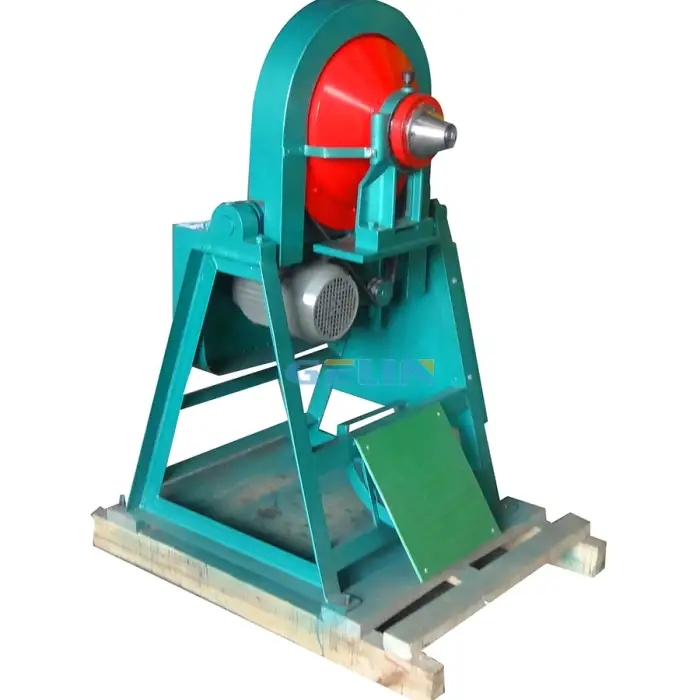
Laboratory equipment cone type ball mill for ore grinding and test

- Section : Machinery
- Category : Mining Machinery
- SKU : 759656940

Products Description
Laboratory equipment cone type ball mill for ore grinding and test

XMQ series cone ball mill is the necessary ore fine grinding equipment for laboratories mineral analysis, applied in metallurgy, geology, coal, building materials and other departments. It is also the supporting equipment for flotation machines and other equipment. It is Favored by related department due to its compact size, convenient operation, precise efficiency.
Lab ball mill is a new milling equipment. It is in the nature of high shell rotating speed, inner lining smoothly, high milling
medium stowing ratio, many mediums, good grinding and polish effectiveness etc

Features
- Stable operation, feeding and discharging controlled by motor,
- Fast and convenient milling,
- The time of operating can be selected freely,
- Well-distributed of the particle size,
- Small over degree of grinding, high grinding efficiency,
- Small power consumption.


Product Parameter
| Model | XMQ150×50 | XMQ150×100 | XMQ240×90 | XMQ350×160 |
| Drum size (mm) | 150×50 | 150×100 | 240×90 | 350×160 |
| Volume (L) | 1 | 3 | 6.25 | 21.58 |
| Capacity (g) | 200 | 400 | 1000 | 4000 |
| Feed size(mm) | ≤3 | ≤3 | ≤3 | ≤3 |
| Output size(mm) | ≤0.074 | ≤0.074 | ≤0.074 | ≤0.074 |
| Drum speed (r/min) | 112±2 | 112±2 | 96±2 | 62±2 |
| Power (kw) | 0.25 | 0.25 | 0.55 | 1.1 |
| Overall dimensions (mm) | 915×530×1160 | 915×750×1160 | 1050×640×1164 | 700×575×1190 |
| Weight (kg) | 90 | 130 | 170 | 300 |
Packing & Delivery

- Shipping Timeframes: All orders are processed within 2-5 business days (excluding weekends and holidays). After your order has been processed, the estimated delivery time is before 25 Aug, 2026, depending on customs, Please note that due to high demand, some items may experience longer shipping times, which will be communicated at order confirmation email.
- Order Processing Time: Please allow 2-5 business days for us to process your order before it is shipped . Orders placed after 16:00 on Fridays, or during weekends and public holidays, will begin processing on the next business day. Processing times may be extended during peak seasons or sales events.
- Manufacturing Time: Some products needs manufacturing time, the manufacturing process will take approximately 10-30 business days depending on the product. This timeframe may vary depending on the complexity of the product and current demand. but this will be communicated with you during order confirmation.
- Returns and Exchanges: We offer a 30-day return policy for most items. If you are not completely satisfied with your purchase, you may return it within 30 days of receipt for a refund or exchange. Items must be unused, in their original packaging, and accompanied by proof of purchase. Return shipping costs are the responsibility of the customer, unless the item was damaged or defective upon arrival.
1. What is the primary use of the Laboratory equipment cone type ball mill?
The Laboratory equipment cone type ball mill is primarily used for fine grinding of ores in laboratories, particularly for mineral analysis in fields such as metallurgy, geology, coal, and building materials.
2. What are the key features of this ball mill?
Key features include stable operation, controlled feeding and discharging by motor, fast milling, selectable operating time, well-distributed particle size, high grinding efficiency with low power consumption.
3. What materials can be processed with this mill?
This mill can process various materials, including ores from metallurgy, coal, and building materials, making it suitable for diverse laboratory applications.
4. What is the capacity of the XMQ150×100 model?
The XMQ150×100 model has a capacity of 400 grams.
5. How does the cone ball mill ensure a high milling efficiency?
The cone ball mill ensures high efficiency through its high shell rotating speed, smooth inner lining, and a high milling medium stowing ratio, which results in effective grinding and polishing.
6. Is the operation of the ball mill user-friendly?
Yes, the ball mill is designed for convenient operation, allowing users to select the operating time freely, which enhances usability.
7. What is the maximum feed size for this ball mill?
The maximum feed size for all models is 3 mm.
8. What is the output size achievable with the laboratory cone ball mill?
The output size achievable with the laboratory cone ball mill is ≤0.074 mm.
9. Can this mill be used as supporting equipment for other machines?
Yes, the laboratory cone ball mill can serve as supporting equipment for flotation machines and other related equipment.
10. What are the overall dimensions of the XMQ240×90 model?
The overall dimensions of the XMQ240×90 model are 1050 mm x 640 mm x 1160 mm.
11. What is the power consumption of the XMQ350×160 model?
The XMQ350×160 model has a power consumption of 1.1 kW.
12. What is the weight of the XMQ150×50 model?
The weight of the XMQ150×50 model is 90 kg.
13. Is there a specific application for this mill in geology?
Yes, in geology, the mill is used for grinding mineral samples to analyze their composition and properties.
14. What type of motor controls the feeding and discharging?
The feeding and discharging of the laboratory cone ball mill are controlled by a motor, allowing for stable and efficient operation.
15. Does the ball mill require any special maintenance?
Routine maintenance, like checking for wear and ensuring proper lubrication, is recommended to keep the ball mill in optimal working condition.
Latest Order Arrivals
Discover our latest orders

12 Heads Embroidery Machine

Toilet Paper Machine Machine

Order Collection

Cross Border Clients

Order cros border countries Collected

Industrial Machine Cllection

Agriculture Processing Machines

Ready for collection

Water Pump Equipment

Packaging Machine and accessories

Fabrics Manufacturing Equipment

Mining Equipments

Food Processing Machine

Batch of Orders

Batch of Orders

Latest Orders Labelled

wheel alignment machines

new arrivals

Pre Orders Offloading

Latest Arrivals

Latest Arrivals

Latest Arrivals

Loading

Toilet paper making machine

Toilet paper making machine

Toilet paper Rewinding Machine

latest arrivals

offloading

order success

order collection

order offloading