B21, China Town Mall, Midrand

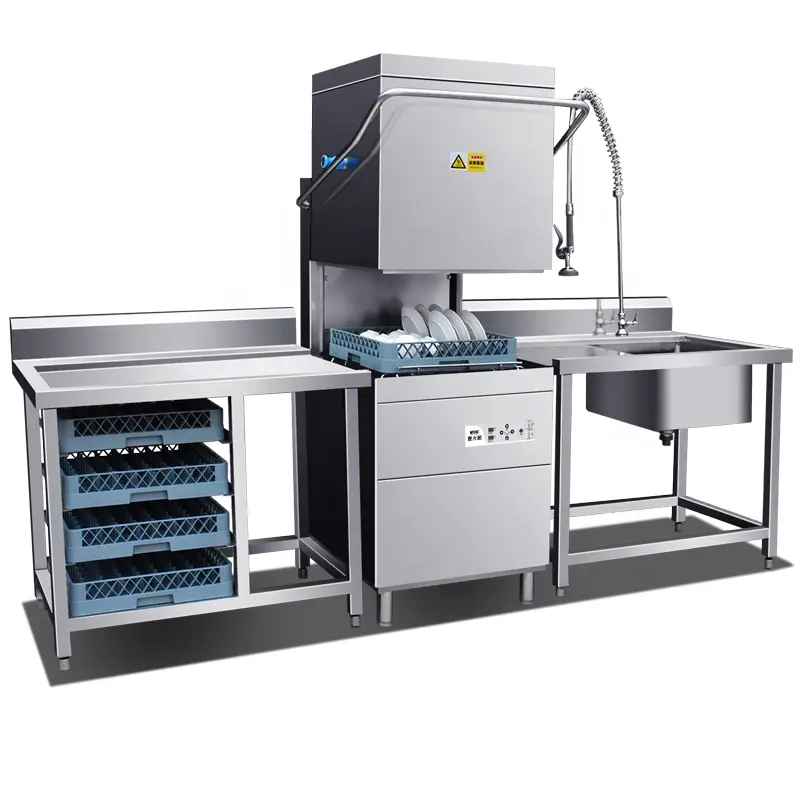
Full Automatic Industrial Electric Dish Washer
Asset finance available
Do you want funding for this equipment?
Afrimart can connect you with trusted funding partners who specialise in asset finance for businesses like yours. Compare options and apply in minutes — final approval is subject to provider review.
Check funding options
Secure & no obligation

- Section : Appliances
- Category : Dish Washers
- SKU : 1600198203361

Product Description
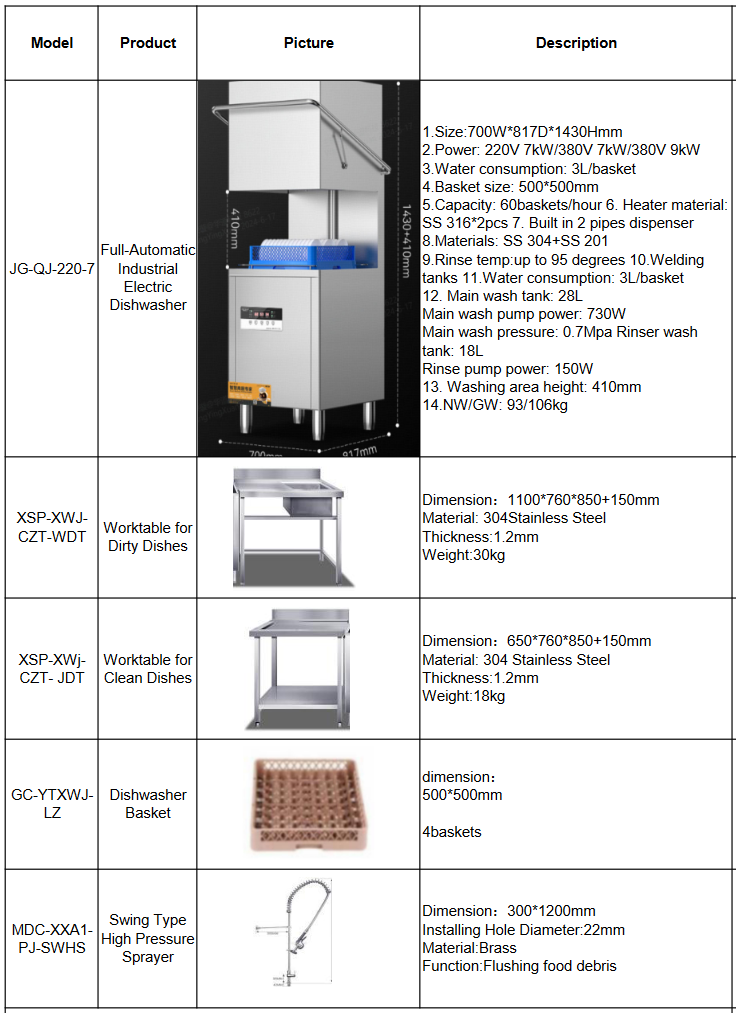
- Shipping Timeframes: All orders are processed within 2-5 business days (excluding weekends and holidays). After your order has been processed, the estimated delivery time is before 03 Aug, 2026, depending on customs, Please note that due to high demand, some items may experience longer shipping times, which will be communicated at order confirmation email.
- Order Processing Time: Please allow 2-5 business days for us to process your order before it is shipped . Orders placed after 16:00 on Fridays, or during weekends and public holidays, will begin processing on the next business day. Processing times may be extended during peak seasons or sales events.
- Manufacturing Time: Some products needs manufacturing time, the manufacturing process will take approximately 10-30 business days depending on the product. This timeframe may vary depending on the complexity of the product and current demand. but this will be communicated with you during order confirmation.
- Returns and Exchanges: We offer a 30-day return policy for most items. If you are not completely satisfied with your purchase, you may return it within 30 days of receipt for a refund or exchange. Items must be unused, in their original packaging, and accompanied by proof of purchase. Return shipping costs are the responsibility of the customer, unless the item was damaged or defective upon arrival.
1. What is a Full Automatic Industrial Electric Dish Washer?
A full automatic industrial electric dish washer is a commercial-grade machine designed to wash large volumes of dishes, utensils, pots, and pans with minimal manual intervention. It automates rinsing, washing, and drying cycles using electric power and is built for continuous, high-capacity use in restaurants, hotels, hospitals, and cafeterias.
2. What capacity can I expect from this type of machine?
Capacities vary by model, but industrial machines typically handle anywhere from several hundred to several thousand plates per hour. Capacity depends on rack size, cycle time, and conveyor speed. Check the specific model's throughput rating for exact numbers.
3. What power requirements are typical for an industrial electric dish washer?
Power requirements depend on size and features. Small industrial units may need single-phase 220–240 V power, while larger units often require three-phase 380–480 V supply. Heating elements and booster heaters increase power demand. Confirm electrical specifications with the manufacturer before installation.
4. What are the water and energy consumption characteristics?
Modern industrial dishwashers are designed for efficient water and energy use, often using pressurized wash systems and heat-recovery options. Water consumption typically ranges from 1–4 liters per rack or 1–10 liters per cycle depending on the machine type. Energy use depends on heater size, insulation, and cycle frequency; consult the technical sheet for exact figures.
5. What detergent and rinse aids should be used?
Use commercial-grade detergents and rinse aids formulated for industrial dishwashers. Avoid household detergents and those containing chlorine or excessive foaming agents unless specified safe by the manufacturer. The machine manual should list recommended products and dosing instructions.
6. How long does a wash cycle take?
Cycle time varies by program and machine configuration. Typical wash cycles range from 60 seconds for high-speed conveyor machines to 5–15 minutes for larger, batch-type industrial units. Many machines offer multiple programs to balance speed and cleaning intensity.
7. What installation requirements are needed?
Installation usually requires a suitable electrical supply (voltage and amperage per model), hot and/or cold water connections, a drain with appropriate waste trap, adequate ventilation, and a level, load-bearing floor. Some installations also need a booster heater or water softener. Always follow the manufacturer's installation guide and use a qualified technician.
8. How do I maintain and clean the machine?
Regular maintenance includes daily removal of debris, cleaning filters and spray arms, checking detergent dosing, descaling as required, and inspecting seals and gaskets. Follow the manufacturer's recommended maintenance schedule for periodic inspections, lubrication, and part replacements to ensure reliability.
9. What safety features are included?
Industrial dishwashers commonly include safety interlocks on access doors, emergency stop buttons, over-temperature protection, and automatic shutoff for low water level or pump failures. Proper grounding and electrical protection are also standard. Refer to the user manual for complete safety instructions.
10. What materials are used in construction?
High-quality industrial machines are typically constructed from stainless steel (304 or 316) for durability, corrosion resistance, and ease of cleaning. Components such as spray arms, racks, and conveyor chains are selected for heavy-duty use.
11. Is a water softener required?
A water softener is recommended in areas with hard water to prevent scale buildup, improve cleaning performance, and extend the life of heating elements and spray nozzles. Some units integrate or are compatible with external softening systems; consult the manufacturer for compatibility.
12. What noise level can I expect?
Noise levels depend on insulation, pump size, and machine design. Industrial units are generally louder than domestic dishwashers, but models with sound-dampening features can reduce noise. Typical industrial levels can range from 60–80 dB; check the technical specifications for the model's rated noise level.
13. Do these machines require certified technicians for service?
For warranty compliance and safety, installation and major service work should be performed by certified or authorized technicians. Routine cleaning and basic filter replacement can usually be done by trained on-site staff following manufacturer instructions.
14. What warranty and support options are available?
Warranty coverage varies by manufacturer but commonly includes a limited parts and labor warranty for one year, with options to purchase extended coverage and service contracts. Verify warranty terms, response times, and available spare parts/support before purchase.
15. Can the machine be customized for specific needs?
Many manufacturers offer configurable options such as different rack sizes, conveyor lengths, booster heaters, filtration systems, chemical dosing pumps, and stainless-steel finishes. Discuss your throughput, space, and operational requirements with the supplier to select or customize an appropriate model.
Latest Order Arrivals
Discover our latest orders

12 Heads Embroidery Machine

Toilet Paper Machine Machine

Order Collection

Cross Border Clients

Order cros border countries Collected

Industrial Machine Cllection

Agriculture Processing Machines

Ready for collection

Water Pump Equipment

Packaging Machine and accessories

Fabrics Manufacturing Equipment

Mining Equipments

Food Processing Machine

Batch of Orders

Batch of Orders

Latest Orders Labelled

wheel alignment machines

new arrivals

Pre Orders Offloading

Latest Arrivals

Latest Arrivals

Latest Arrivals

Loading

Toilet paper making machine

Toilet paper making machine

Toilet paper Rewinding Machine

latest arrivals

offloading

order success

order collection

order offloading