B21, China Town Mall, Midrand

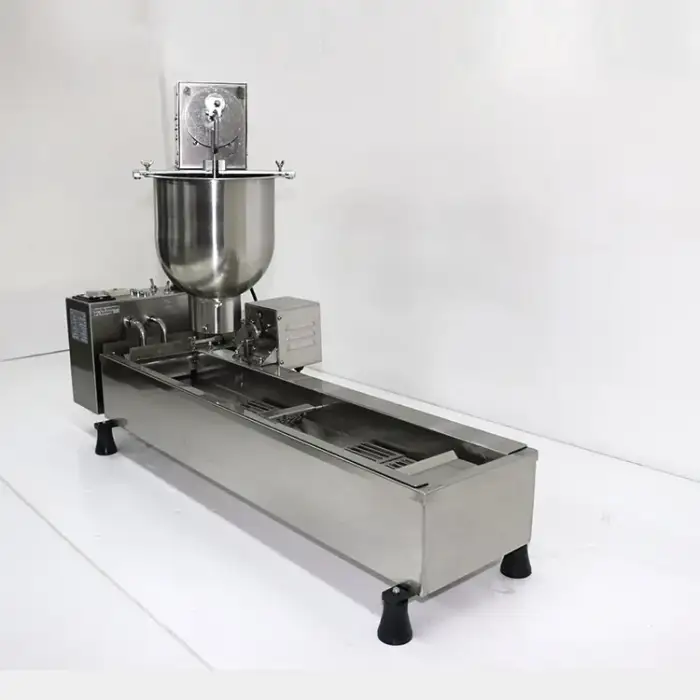
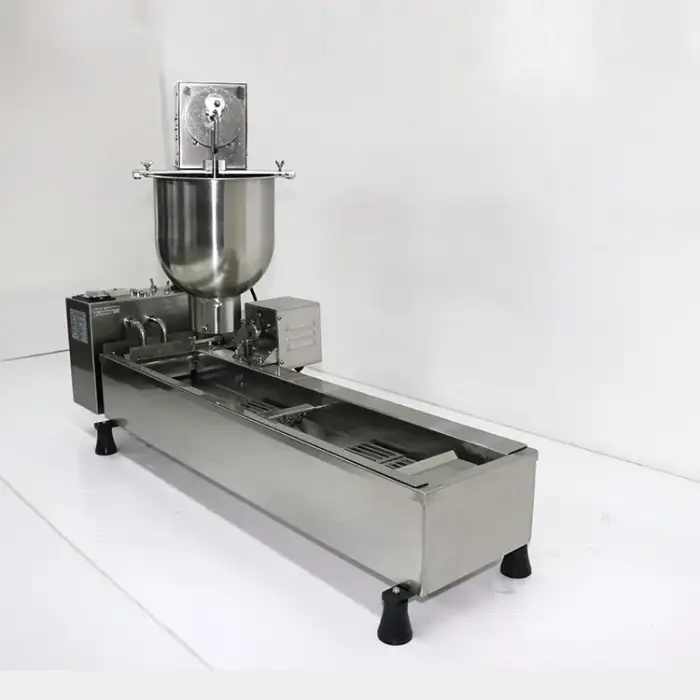
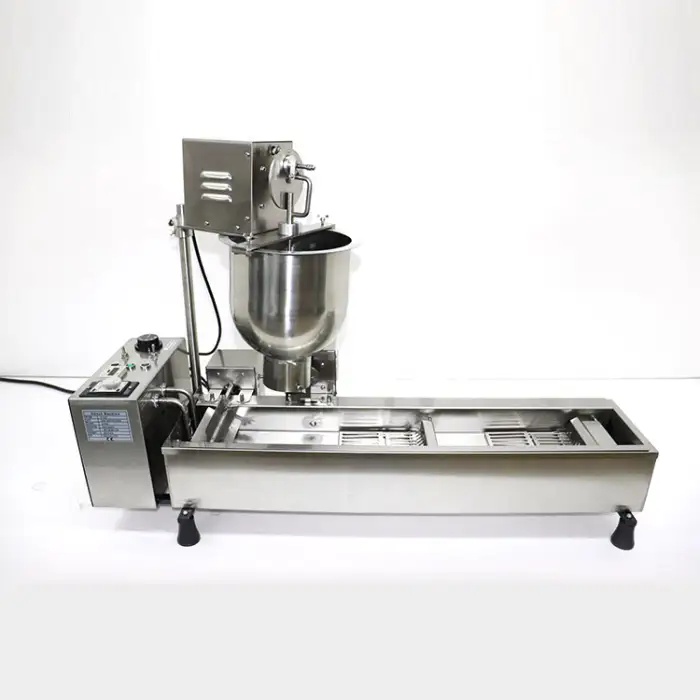
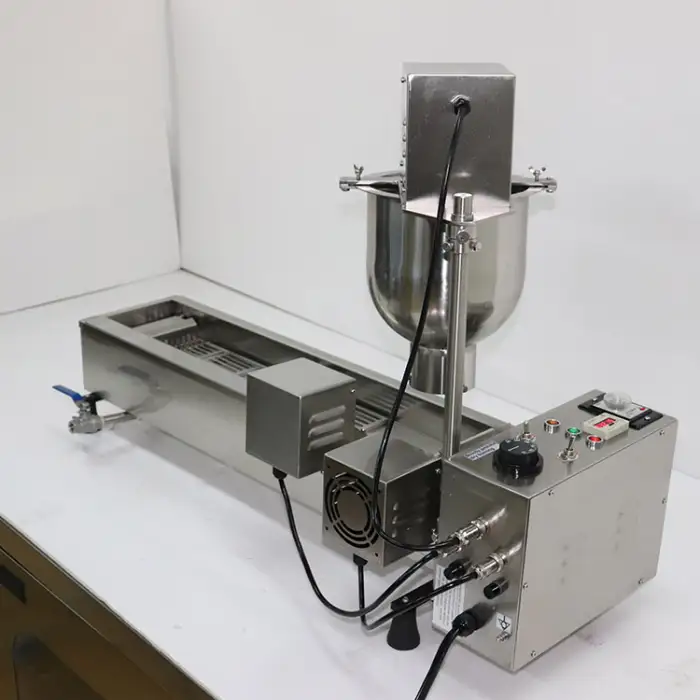
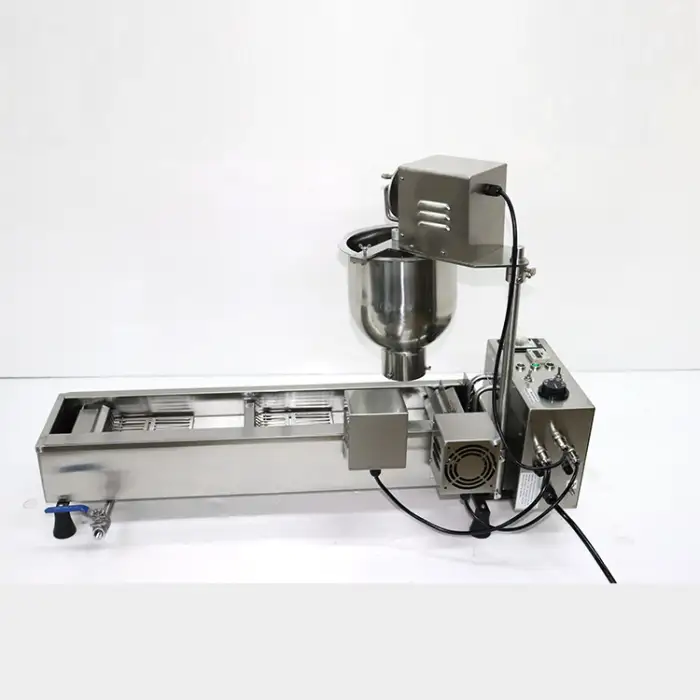
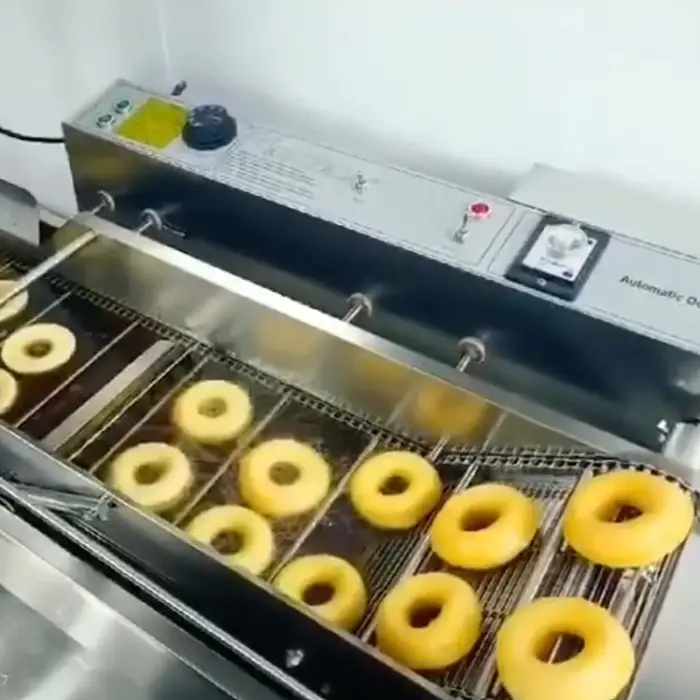
Donuts Maker Commercial Gas Automatic Donuts Making Machine Double Row
Asset finance available
Do you want funding for this equipment?
Afrimart can connect you with trusted funding partners who specialise in asset finance for businesses like yours. Compare options and apply in minutes — final approval is subject to provider review.
Check funding options
Secure & no obligation
- Section : Machinery
- Category : Donut machines
- SKU : 1600799694322

Donuts Maker Commercial Gas Automatic Donuts Making Machine
The Donuts Maker Commercial Electric Automatic Donuts Making Machine is the perfect solution for anyone who loves making delicious donuts! This professional snack machine is designed for high productivity and is easy to use. Whether you are in a bakery or a snack food factory, this machine will help you create tasty donuts quickly and efficiently.
Specifications
| Attribute | Details |
|---|---|
| Power Supply | Gas/electric 220v |
| Max. Capacity | 500-800 Pcs/hour |
| Weight | 32 kg |
| Dimension (L*W*H) | 1100 x 400 x 650 mm |
| Material | Food Grade #304 Stainless Steel |
| Donut Size | 50 mm |
Key Features
- Automatic operation for easy use
- High productivity with up to 800 donuts per hour
- Durable food-grade stainless steel construction
- Compact design for easy placement
- Suitable for various donut sizes
Applications
- Commercial bakeries
- Snack food factories
- Catering services
- Fairs and festivals
- Food trucks and mobile vendors
With the Donuts Maker Commercial Electric Automatic Donuts Making Machine, you can easily create delicious donuts for any occasion. It's a must-have for anyone in the food industry!
Product Info Gallery
- Shipping Timeframes: All orders are processed within 2-5 business days (excluding weekends and holidays). After your order has been processed, the estimated delivery time is before 05 Aug, 2026, depending on customs, Please note that due to high demand, some items may experience longer shipping times, which will be communicated at order confirmation email.
- Order Processing Time: Please allow 2-5 business days for us to process your order before it is shipped . Orders placed after 16:00 on Fridays, or during weekends and public holidays, will begin processing on the next business day. Processing times may be extended during peak seasons or sales events.
- Manufacturing Time: Some products needs manufacturing time, the manufacturing process will take approximately 10-30 business days depending on the product. This timeframe may vary depending on the complexity of the product and current demand. but this will be communicated with you during order confirmation.
- Returns and Exchanges: We offer a 30-day return policy for most items. If you are not completely satisfied with your purchase, you may return it within 30 days of receipt for a refund or exchange. Items must be unused, in their original packaging, and accompanied by proof of purchase. Return shipping costs are the responsibility of the customer, unless the item was damaged or defective upon arrival.
1. What power options are available for the Donuts Maker Commercial Double Row?
The machine is available in gas and electric versions. The electric model requires 220V. For gas models, please specify LPG or natural gas when ordering and arrange professional gas installation.
2. What is the production capacity?
Maximum capacity is 500–800 donuts per hour depending on batter viscosity, frying temperature, and operator workflow. The double-row design increases throughput by cooking two lines of donuts simultaneously.
3. What size donuts does the machine make?
Standard mold size is 50 mm diameter. The machine can be supplied with different mold sizes or adjustable molds on request—contact the supplier for custom sizes.
4. What are the machine dimensions and footprint?
Overall dimensions are 1100 x 400 x 650 mm (L x W x H). Allow additional clearance for ventilation, service access and operator workspace.
5. What material is the machine made from?
All food-contact parts and main body are constructed from food-grade #304 stainless steel for durability and easy cleaning.
6. How heavy is the machine and is it portable?
The unit weighs approximately 32 kg. It is compact but not intended for frequent relocation; optional casters may be available—check with the supplier.
7. Is the machine fully automatic?
Yes — it is an automatic donuts making machine that forms and fries donuts with minimal manual input. An operator is required to load batter, monitor oil level/temperature and collect finished donuts.
8. What type of frying oil should I use and how often should it be changed?
Use a high smoke-point frying oil such as refined vegetable, canola, or peanut oil. Oil change frequency depends on usage and food safety standards; for heavy commercial use expect to replace oil regularly (daily to weekly) and filter oil between batches to extend life.
9. How do I clean and maintain the machine?
Clean daily by turning off and cooling the unit, draining and filtering oil, wiping stainless surfaces with food-safe cleaners, and removing/replacing any detachable parts for soaking if applicable. Perform routine checks on burners/heating elements, thermostats and conveyor/mechanisms. Follow the supplier maintenance guide for detailed procedures.
10. Can donut size and shape be changed during production?
Size/shape changes require swapping molds or plates. Some models support quick-change molds; confirm availability when ordering or request customization.
11. What safety features should I expect?
Typical safety features include a thermostat-controlled heating system, flame failure protection on gas models (when installed professionally), oil level monitoring recommendations, and insulated exterior panels. Always adhere to local safety codes and user manual guidelines.
12. Do you provide installation, training or after-sales support?
Many suppliers offer installation guidance, operator training and after-sales support. Confirm the level of service, warranty terms and spare parts availability with the seller before purchase.
13. Are spare parts and consumables available?
Yes — common spare parts (gaskets, thermostats, burners/heating elements, molds) and consumables are typically available. Ask the supplier for a parts list and lead times.
14. What certifications or standards does the machine meet?
Certification varies by manufacturer and model. Request documentation for CE, NSF or other local food-safety and electrical/gas safety certificates from your supplier prior to purchase.
15. How should I choose between the gas and electric model?
Choose based on available utilities, operating cost, and site constraints. Gas models often heat faster and may be preferred for mobile or high-volume setups, while electric units are simpler to install where 220V power is readily available. Consult the supplier for cost and performance comparisons tailored to your location.
Latest Order Arrivals
Discover our latest orders

12 Heads Embroidery Machine

Toilet Paper Machine Machine

Order Collection

Cross Border Clients

Order cros border countries Collected

Industrial Machine Cllection

Agriculture Processing Machines

Ready for collection

Water Pump Equipment

Packaging Machine and accessories

Fabrics Manufacturing Equipment

Mining Equipments

Food Processing Machine

Batch of Orders

Batch of Orders

Latest Orders Labelled

wheel alignment machines

new arrivals

Pre Orders Offloading

Latest Arrivals

Latest Arrivals

Latest Arrivals

Loading

Toilet paper making machine

Toilet paper making machine

Toilet paper Rewinding Machine

latest arrivals

offloading

order success

order collection

order offloading