B21, China Town Mall, Midrand

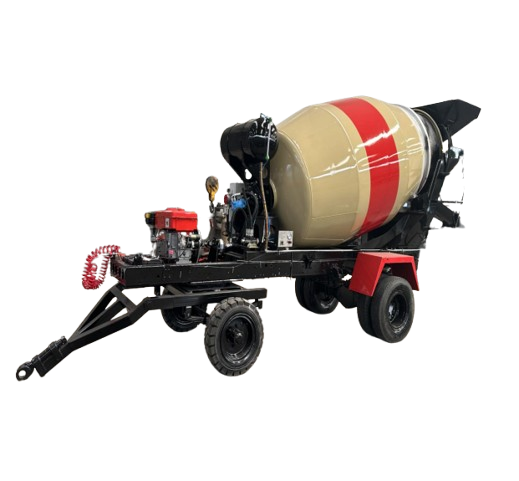
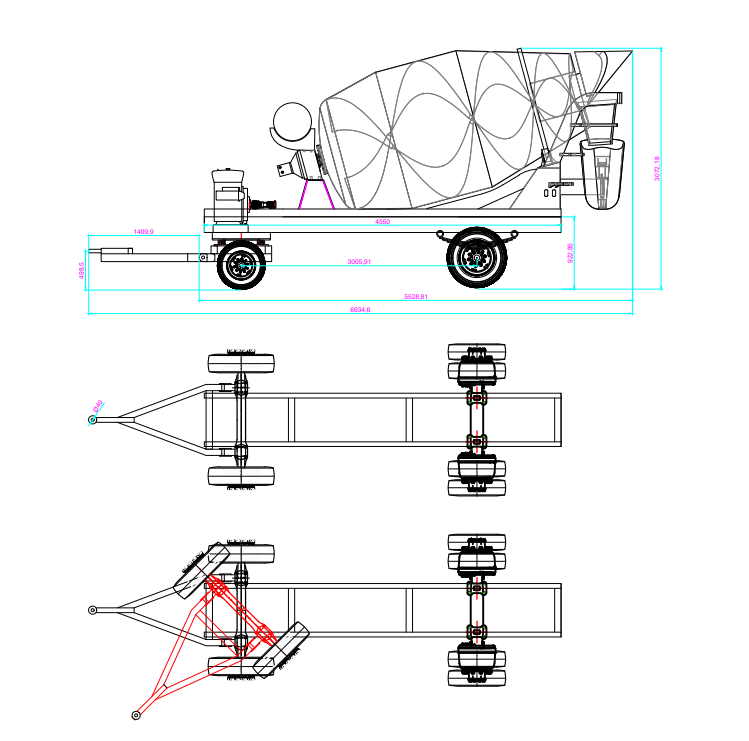
Concrete mixing tank - 4 cubic meter with trailer
Asset finance available
Do you want funding for this equipment?
Afrimart can connect you with trusted funding partners who specialise in asset finance for businesses like yours. Compare options and apply in minutes — final approval is subject to provider review.
Check funding options
Secure & no obligation

- Section : Machinery
- Category : Construction Machinery
- SKU : 1600937456462

Product Description
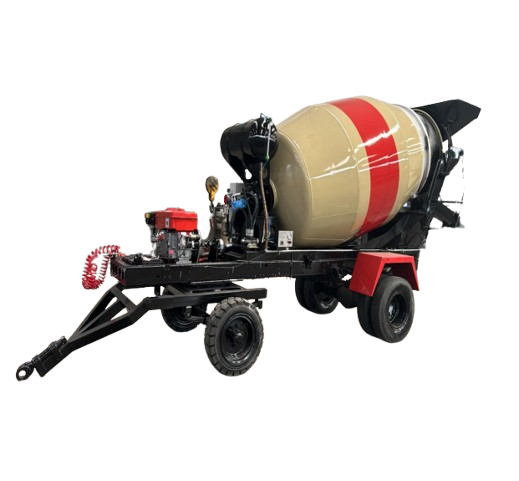
Capacity:4 cubic meter with trailer
Weight:3.6tons
Voltage:380V
Power:45hp four cylinder engine
Speed reducer:ZF
Hydraulic pump:SUNNY 90
Radiator:36L
Tank thickness:4.5mm
Mud thickness:3.0mm
- Shipping Timeframes: All orders are processed within 2-5 business days (excluding weekends and holidays). After your order has been processed, the estimated delivery time is before 13 Sep, 2026, depending on customs, Please note that due to high demand, some items may experience longer shipping times, which will be communicated at order confirmation email.
- Order Processing Time: Please allow 2-5 business days for us to process your order before it is shipped . Orders placed after 16:00 on Fridays, or during weekends and public holidays, will begin processing on the next business day. Processing times may be extended during peak seasons or sales events.
- Manufacturing Time: Some products needs manufacturing time, the manufacturing process will take approximately 10-30 business days depending on the product. This timeframe may vary depending on the complexity of the product and current demand. but this will be communicated with you during order confirmation.
- Returns and Exchanges: We offer a 30-day return policy for most items. If you are not completely satisfied with your purchase, you may return it within 30 days of receipt for a refund or exchange. Items must be unused, in their original packaging, and accompanied by proof of purchase. Return shipping costs are the responsibility of the customer, unless the item was damaged or defective upon arrival.
1. What is the mixing capacity of this concrete mixing tank?
The tank has a 4 cubic meter (4 m3) mixing capacity per batch.
2. Is the unit mounted on a trailer and transportable?
Yes — the mixing tank is supplied with a trailer for road transport, making it mobile between sites.
3. What is the weight of the machine for towing considerations?
The unit weighs 3.6 tons (approximately 3600 kg). Ensure your towing vehicle and license class are rated for this gross weight and that local towing regulations are followed.
4. What power source does the mixer use?
The unit is driven by a 45 hp four-cylinder engine. In addition, the electrical system requires a 380 V supply (three-phase) for auxiliary equipment—confirm exact electrical needs with the supplier.
5. What type of transmission and hydraulic components are fitted?
The speed reducer is a ZF unit and the hydraulic pump is a SUNNY 90, both specified to provide reliable drive and hydraulic performance.
6. What is the radiator capacity and why does it matter?
The radiator capacity is 36 liters. Adequate radiator capacity helps maintain correct engine temperature during prolonged mixing or high ambient temperatures—regular coolant checks are recommended.
7. What are the tank and blade material/thickness specifications?
The tank shell thickness is 4.5 mm and the mixing (mud/blade) thickness is 3.0 mm, indicating a robust steel construction suitable for typical concrete mixing loads.
8. How long does a typical mixing cycle take?
Mixing time depends on the concrete mix and batch size; typical homogenous batches often take several minutes. For precise cycle times and recommended procedures, follow the manufacturer's mixing guidelines.
9. What routine maintenance is required?
Routine maintenance includes checking hydraulic oil and filters, engine oil and coolant levels (36 L radiator), inspecting the ZF reducer, greasing bearings, cleaning the drum after use, and checking fasteners and wear on blades and lining.
10. Are spare parts like the hydraulic pump, reducer, and blades available?
Yes — common service parts such as the SUNY 90 hydraulic pump, ZF speed reducer components, blades, and seals should be available through the manufacturer or authorized dealers. Check with your supplier for lead times and part numbers.
11. What towing and braking equipment is required on the trailer?
Trailer requirements vary by region, but generally the towing vehicle must be rated for 3.6 tons, and the trailer should have appropriate brakes, lights and safety chains. Confirm local road regulations and ensure the trailer hitch and braking system are compatible.
12. What safety precautions should operators follow?
Operators should follow standard safety practices: wear PPE, lock out power before maintenance, avoid standing near rotating components, ensure proper loading to prevent overload, and follow the manufacturer's operating manual and local safety regulations.
13. Are transport dimensions and loading instructions provided?
Transport dimensions are not listed in the basic spec. Request the detailed dimensional drawings and loading/unloading instructions from the supplier to ensure compliance with transport limits and site access.
14. Is there a warranty or after-sales support?
Warranty and after-sales support vary by supplier. Ask the vendor for warranty duration, what it covers (engine, hydraulics, structural), and available service plans or on-site support options.
Latest Order Arrivals
Discover our latest orders

12 Heads Embroidery Machine

Toilet Paper Machine Machine

Order Collection

Cross Border Clients

Order cros border countries Collected

Industrial Machine Cllection

Agriculture Processing Machines

Ready for collection

Water Pump Equipment

Packaging Machine and accessories

Fabrics Manufacturing Equipment

Mining Equipments

Food Processing Machine

Batch of Orders

Batch of Orders

Latest Orders Labelled

wheel alignment machines

new arrivals

Pre Orders Offloading

Latest Arrivals

Latest Arrivals

Latest Arrivals

Loading

Toilet paper making machine

Toilet paper making machine

Toilet paper Rewinding Machine

latest arrivals

offloading

order success

order collection

order offloading